
DIGITAL MARKETING


Mesh LED Screens in Dubai, UAE
Looking for a mesh LED screen in Dubai for a building facade, architectural feature or large-format digital display? EDS provides LED mesh display solutions for commercial buildings, retail destinations, hotels, entertainment venues and suitable architectural installations across Dubai and the UAE.
LED mesh technology uses an open-grid display structure that can provide large-format digital content while allowing varying degrees of light, air and visibility to pass through the screen. Its relatively open construction can make mesh LED particularly useful for large facade applications where a conventional solid LED display may not be the most appropriate solution.
EDS can help evaluate the right mesh LED configuration based on screen dimensions, viewing distance, pixel pitch, transparency or openness, brightness, structural requirements, environmental exposure and content, with support covering technical planning, supply, installation, configuration and maintenance.
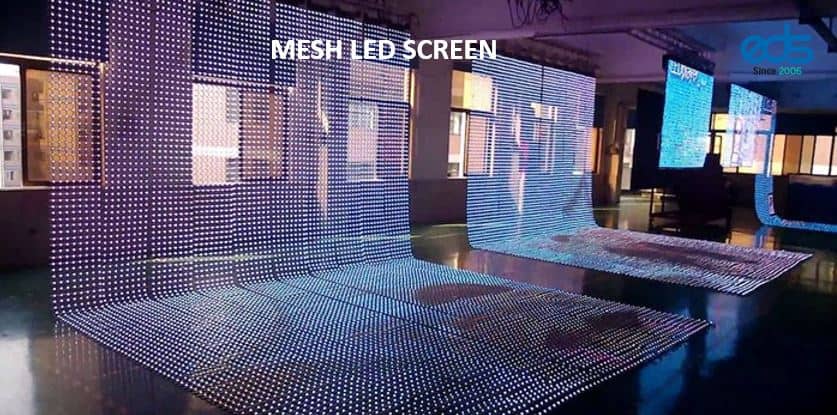
What Is a Mesh LED Screen?
A mesh LED screen is a digital display built using LED strips, modules or cabinets arranged in an open-grid structure rather than creating a completely solid display surface.
The spaces within the mesh structure can allow:
Light • Airflow • Partial Visibility
to pass through the installation, depending on the particular product and specification.
This makes LED mesh particularly useful for selected large-format and architectural applications.
Mesh LED screens can display:
Videos • Animations • Branding • Advertising • Promotional Content • Visual Effects • Information
and can be configured in different dimensions according to the selected technology and project requirements.
How Does an LED Mesh Screen Work?
LED mesh systems arrange LEDs across an open structural grid.
When illuminated, the LEDs combine to create digital images and motion content when viewed from an appropriate distance.
Because there are physical spaces between the LED elements, the screen does not form the same continuous solid surface as a conventional LED display.
The final visual result depends on:
Pixel Pitch • Screen Dimensions • Viewing Distance • Brightness • Mesh Openness • Content • Viewing Angle
From an appropriate distance, the audience primarily perceives the digital content rather than the physical spaces within the screen.
Why Choose a Mesh LED Screen?
Mesh LED technology can offer specific advantages for suitable large-format installations.
Open Display Structure
The open-grid construction can allow varying levels of light and air to pass through the screen.
This can be particularly important for architectural and facade applications.
Suitable for Large Display Areas
Mesh LED technology can be considered for large surfaces where a conventional solid display may create different structural, weight or airflow considerations.
Digital Content
The display can show changing:
Advertising • Branding • Videos • Animations • Promotions • Information
rather than a single static message.
Architectural Integration
Mesh LED can potentially be incorporated into selected building and facade designs while maintaining a degree of openness.
Large-Distance Visibility
Mesh LED screens can be particularly appropriate where displays are large and primarily viewed from medium or longer distances.
EDS Mesh LED Screen Planning Insight
The value of mesh LED is not simply that it can create a very large screen. Its main advantage is the ability to balance digital display area with architectural openness.
For a facade project, EDS evaluates:
Screen Area + Viewing Distance + Pixel Pitch + Openness + Brightness + Structure + Wind + Environment + Maintenance Access + Content + Budget
A tighter pixel pitch may improve image density but can affect factors such as openness, weight and cost.
Similarly, the most open mesh configuration may not provide the image density required for a particular viewing distance.
The objective is therefore to find the appropriate balance between visual performance and the physical requirements of the building or installation.
Where Can Mesh LED Screens Be Used?
Depending on the selected system, property and applicable approvals, mesh LED screens can be considered for:
Building Facades • Commercial Properties • Shopping Centres • Hotels • Retail Destinations • Entertainment Venues • Architectural Features • Large-Format Digital Installations
The technology is particularly relevant when the display needs to cover a substantial area without creating a completely solid visual surface.
Mesh LED Screens for Building Facades
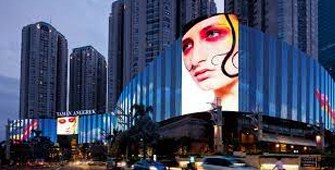
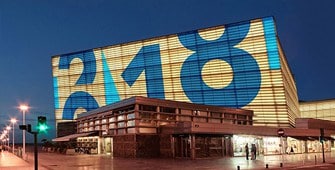
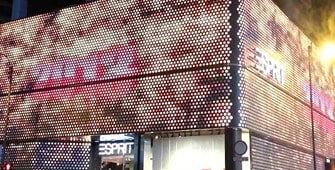
Building facades are one of the most important applications for LED mesh technology.
Large exterior surfaces can potentially be transformed into digital communication areas capable of displaying:
Brand Content • Advertising • Animations • Promotional Campaigns • Architectural Visuals
Unlike a completely solid LED screen, the open structure of mesh LED can be useful where the facade design requires a degree of:
Light Transmission • Airflow • Visibility • Reduced Visual Mass
However, facade installations require careful technical planning.
The project should consider:
Building Structure • Screen Weight • Wind Exposure • Fixing Method • Electrical Supply • Data Connectivity • Maintenance Access • Applicable Approvals
The screen should therefore be planned as part of the building environment rather than simply attached to an available facade.
Mesh LED Screens for Commercial Buildings
Commercial properties can use mesh LED technology for suitable large-scale digital communication.
Potential applications include:
Branding • Advertising • Promotions • Tenant Campaigns • Architectural Content
The correct solution depends on:
Building Height • Screen Position • Viewing Distance • Audience Movement • Surrounding Roads • Architecture
A display viewed from across a road requires a different pixel pitch and content approach from one primarily viewed by pedestrians near the property.
Mesh LED Screens for Shopping Centres
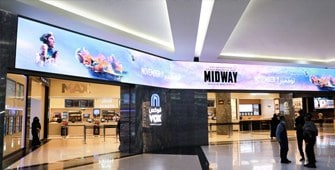
Shopping centres and retail destinations can potentially use LED mesh for selected:
Exterior Facades • Architectural Features • Atriums • Large Promotional Areas
Content can include:
Retail Campaigns • Events • Brand Advertising • Seasonal Promotions • Destination Content
The screen specification should reflect where audiences will encounter the display and whether they are:
Walking • Driving • Standing at a Distance • Viewing from Multiple Levels
Mesh LED Screens for Hotels & Hospitality
Hotels and hospitality properties may consider mesh LED technology for selected large architectural surfaces.
Potential content can include:
Brand Visuals • Events • Promotions • F&B Campaigns • Architectural Animations
For hospitality environments, the digital display should complement the property’s architecture rather than overwhelm it.
Consideration should be given to:
Viewing Distance • Operating Hours • Brightness • Nearby Properties • Architecture • Content
Mesh LED Screens for Entertainment Venues
Entertainment destinations can use large-format LED mesh screens for:
Event Content • Branding • Promotions • Sponsor Content • Visual Effects
Depending on the installation, the open-grid design can be useful where a large display area is required while maintaining airflow or reducing the physical density of the screen structure.
Mesh LED Screens for Architectural Installations
LED mesh does not need to function purely as an advertising screen.
It can also become part of an architectural lighting or digital-media concept.
Content can include:
Abstract Animations • Motion Graphics • Brand Elements • Seasonal Visuals • Architectural Effects
For these projects, screen technology and content should ideally be considered together during the design stage.
Large-Format Mesh LED Displays
One of the principal applications of LED mesh is creating large digital display surfaces.
However, making a screen larger does not automatically make it more effective.
A large-format installation should be planned according to:
Viewing Distance • Building Proportions • Pixel Pitch • Native Resolution • Audience Direction • Content • Architecture
A screen covering a very large facade but displaying overly detailed creative may perform poorly if the audience primarily sees it from a substantial distance.
Understanding Mesh LED Openness
One of the key characteristics of mesh LED technology is its open structure.
Depending on the system, spaces between LED elements can allow a degree of:
Light Transmission • Airflow • Visibility
through the display.
The level of openness varies by product and should not be treated as a universal specification.
It can be influenced by:
Pixel Pitch • Module Design • LED Strip Arrangement • Supporting Structure
Businesses should therefore evaluate the actual screen specification rather than relying simply on the term “mesh LED.”
Mesh LED Screen Transparency vs Image Density
Mesh LED projects often involve a trade-off between openness and image density.
Greater spacing between LED elements can create a more open structure.
Closer LED spacing can provide greater pixel density.
The correct balance depends on the application.
For example:
Large Building Facade: Openness, weight and long-distance viewing may be particularly important.
Closer Commercial Installation: Greater image density may become more important.
Architectural Feature: The physical appearance of the screen when switched off may also matter.
There is no single mesh specification that is appropriate for every project.
Mesh LED Screen Pixel Pitch
Pixel pitch is the distance between neighbouring LED pixels and is normally expressed in millimetres.
Mesh LED systems can be available with different pixel configurations depending on the manufacturer and application.
A smaller pixel pitch generally provides greater pixel density.
However, mesh LED screens are frequently used for larger displays and longer viewing distances, where extremely fine pixel pitches may not be necessary.
The appropriate specification depends on:
Viewing Distance • Screen Dimensions • Content • Openness Requirement • Resolution • Budget
Choosing the Right Pixel Pitch for LED Mesh
Start with the expected viewing distance.
A large facade viewed primarily from 50 metres away has different image-density requirements from a mesh display viewed from much closer.
EDS considers:
Minimum Viewing Distance • Typical Viewing Distance • Screen Dimensions • Content Detail • Required Resolution • Screen Openness
before evaluating the appropriate pixel pitch.
The smallest available pitch is not automatically the best option.
Mesh LED Screen Resolution
The final native resolution of a mesh LED screen is determined by:
Physical Screen Dimensions + Pixel Configuration
Because mesh displays can cover substantial areas, the physical screen can be extremely large without necessarily requiring the pixel density associated with close-viewing indoor displays.
Content should therefore be created according to the actual:
Native Resolution • Aspect Ratio • Viewing Distance
rather than simply stretching existing advertising artwork across the display.
Mesh LED Screen Brightness
For exterior mesh LED installations, brightness is an important consideration.
The required level depends on:
Screen Orientation • Sunlight Exposure • Viewing Distance • Surrounding Buildings • Operating Hours • Ambient Light
A facade exposed to strong direct sunlight can require a different specification from a display installed in a shaded architectural environment.
The objective should be appropriate visibility under the actual site conditions rather than simply selecting the highest available brightness.
Mesh LED Screens & Airflow
The open structure of mesh LED can allow air to pass through portions of the screen.
This can be an important consideration for large facade installations.
However, an open screen does not eliminate structural or wind-load requirements.
The complete installation still needs to be evaluated according to:
Screen Area • Mesh Design • Building Height • Installation Position • Supporting Structure • Wind Exposure
Structural engineering requirements should be determined according to the actual project.
Mesh LED Screen Weight
Mesh LED systems can offer different weight characteristics from conventional solid LED cabinets because of their more open construction.
However, screen weight varies considerably between products.
The complete structural load should include relevant components such as:
LED Modules • Supporting Frames • Cabling • Power Components • Installation Hardware
Product-specific weight information should therefore be used during structural planning rather than assuming all mesh LED screens are lightweight.
Mesh LED Screens & Wind Load
Wind is particularly important for large facade screens.
Even an open-grid display presents a physical surface to wind.
The supporting system should therefore be evaluated according to:
Screen Dimensions • Installation Height • Mesh Openness • Building Position • Wind Exposure • Supporting Structure
For major facade installations, appropriate structural engineering may be required.
Mesh LED Screens & Dubai Climate
Exterior LED mesh installations in Dubai can be exposed to:
High Temperatures • Strong Sunlight • Dust • Humidity • Wind • Rain
The selected system should therefore be suitable for the actual environmental conditions.
Project planning can require consideration of:
Outdoor Protection • Heat Dissipation • Power Components • Connectors • Cabling • Supporting Structure
The environmental specification should be confirmed for the selected product rather than assumed simply because it is described as a mesh LED screen.
Understanding IP Ratings
Outdoor LED products can carry Ingress Protection—or IP—ratings indicating levels of protection against solids and water.
The required IP characteristics depend on:
Installation • Screen Design • Front Exposure • Rear Exposure • Maintenance Configuration
For facade installations, EDS recommends reviewing the product-specific environmental protection as part of the technical evaluation.
Mesh LED Screen Installation
Mesh LED installations can involve several technical stages.
Depending on the project, these can include:
Site Survey • Structural Evaluation • Supporting Framework • Screen Installation • Electrical Supply • Data Connectivity • Controller Setup • Configuration • Testing
Large facade projects may require coordination between:
Property Owner • Building Management • Structural Consultant • MEP Teams • Installation Team • Relevant Authorities
The exact requirements depend on the site.
Building-Mounted Mesh LED Screens
When a mesh LED screen is mounted to a building, the supporting method should be developed according to the actual facade and structure.
Important considerations include:
Fixing Points • Screen Weight • Wind Load • Building Materials • Access • Power • Cabling • Maintenance
The supporting structure should not be designed independently from the selected LED system.
Both should be considered together.
Maintenance Access for Mesh LED Screens
Maintenance becomes particularly important when a screen covers a large building area.
The installation should provide an appropriate method for accessing:
LED Modules • Power Supplies • Data Components • Cables • Connections
The exact service approach depends on the mesh system and supporting structure.
Maintenance access should therefore be established before installation, not after the screen has been mounted to the building.
What Content Can Be Displayed on LED Mesh?
Depending on the controller and system, mesh LED screens can display:
Video • Animation • Branding • Advertising • Promotional Content • Architectural Visuals • Information
Because mesh displays are often large and viewed from considerable distances, content should generally prioritise:
Strong Visuals • Large Typography • Simple Messages • Clear Branding
Very detailed information may be difficult to interpret from longer viewing distances.
Designing Content for Mesh LED Screens
Content should be created specifically for the final mesh LED display.
Consider Viewing Distance
A facade screen may be viewed from tens or even hundreds of metres away depending on the site.
Small text should therefore be avoided.
Use Strong Visual Forms
Large shapes, bold typography and clear visual hierarchy generally translate more effectively to large architectural displays.
Account for the Mesh Structure
The physical openness of the screen can influence the perceived appearance of detailed content.
Keep Advertising Messages Simple
For road-facing displays, audiences may have only a short opportunity to understand the message.
Design at the Correct Resolution
Content should be produced according to the final screen’s:
Native Resolution • Aspect Ratio • Dimensions
Mesh LED Content Management
Depending on the system, content can be managed through an appropriate:
Media Player • LED Controller • Content Management System • Local Network • Remote Management Platform
Potential functionality can include:
Content Scheduling • Campaign Rotation • Remote Updates • Time-Based Content • Multiple Screen Management
The required system depends on how the screen will be operated.
Mesh LED Screen Maintenance
Permanent mesh LED installations require ongoing maintenance.
Depending on the screen and installation, this can include:
Visual Inspection • Module Replacement • Power-Supply Checks • Controller Checks • Cable Inspection • Cleaning • Calibration • Structural Inspection • Software Support
Large facade installations should have an appropriate maintenance strategy because access can become more complicated after the screen has been installed.
Mesh LED vs Conventional Outdoor LED Screen
Mesh LED and conventional outdoor LED screens serve different requirements.
| Factor | Mesh LED Screen | Conventional Outdoor LED |
|---|---|---|
| Structure | Open-grid | Generally solid |
| Airflow | Greater potential airflow | More restricted |
| Visibility Through Screen | Possible to varying degrees | Generally blocked |
| Large Facade Use | Particularly suitable | Possible depending on structure |
| Image Density | Depends on mesh configuration | Wide range available |
| Close Viewing | Depends on specification | More options available |
| Architectural Integration | Major application | Suitable for conventional display areas |
| Best Use | Large facades and open architectural installations | General outdoor digital displays |
If a project simply requires a conventional rectangular outdoor display on a solid structure, a standard outdoor LED screen may be more appropriate.
Mesh LED becomes particularly valuable when large display area and architectural openness need to be considered together.
Mesh LED vs Transparent LED
Mesh LED and transparent LED can both provide a degree of openness, but their typical applications differ.
Transparent LED is commonly used for:
Retail Windows • Glass Storefronts • Showrooms • Interior Glass Surfaces
Mesh LED can be more appropriate for:
Large Building Facades • Architectural Exteriors • Large-Format Open Display Structures
The right choice depends on:
Screen Size • Viewing Distance • Structure • Glass • Environment • Transparency Requirement
Mesh LED vs Flexible LED
Flexible LED is primarily intended for displays that need to follow:
Curved Walls • Columns • Cylindrical Structures • Concave or Convex Shapes
Mesh LED is primarily relevant where:
Large Display Area • Openness • Airflow • Facade Integration
are important considerations.
If the project requires a tightly curved column, flexible LED may be more appropriate.
If it requires a very large open facade display, mesh LED may be the better technology to evaluate.
When Is Mesh LED the Right Choice?
Mesh LED is particularly worth considering when:
A Large Building Facade Is Being Used
The Display Needs an Open Structure
Some Light or Visibility Through the Screen Is Important
Airflow Is a Project Consideration
A Conventional Solid LED Screen Would Create Different Structural Requirements
The Display Is Primarily Viewed from Medium or Long Distances
The LED Installation Is Intended to Integrate with the Architecture
When Might a Conventional LED Screen Be Better?
Mesh LED is not automatically the best choice for every large display.
A conventional LED screen may be more appropriate when:
The Screen Is Mounted Against a Solid Wall
Transparency or Openness Is Not Required
Close-Viewing Image Density Is Particularly Important
The Display Area Is Relatively Small
A Standard Outdoor LED Installation Meets the Requirement
The technology should be selected according to the actual site rather than simply because mesh LED can cover large areas.
How Much Does a Mesh LED Screen Cost in Dubai?
There is no single fixed price for a mesh LED screen in Dubai.
Cost depends on:
Screen Width & Height • Total Display Area • Pixel Pitch • Mesh Configuration • Brightness • Outdoor Specification • Supporting Structure • Controller • Electrical Requirements • Installation Height • Access • Maintenance Requirements
For large facade projects, the LED screen itself may be only one component of the total project cost.
The complete project can also involve:
Structural Engineering • Supporting Framework • Access Equipment • Electrical Work • Installation • Permits or Approvals
where applicable.
For this reason, comparing mesh LED systems solely according to price per square metre can be misleading.
Mesh LED Screen Permits & Approvals in Dubai
Large exterior LED installations can be subject to approvals depending on:
Location • Building • Screen Dimensions • Supporting Structure • Intended Use • Advertising Function
Where a mesh LED screen is intended to display outdoor advertising, the applicable Dubai outdoor advertising requirements should be considered before installation.
Property-owner, building-management and other technical approvals may also be required depending on the project.
EDS can help coordinate project requirements with the relevant property stakeholders, technical parties and applicable authorities.
Final approval depends on the actual location, installation and intended use.
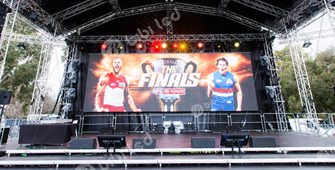
Partner with Us
At EDS, we are committed to delivering cutting-edge mesh LED screens in Dubai, UAE. Whether you’re planning a large-scale event, promotional campaign, or outdoor exhibition, our mesh LED solutions offer unmatched versatility and impact. Contact us today to explore how our mesh LED screens can transform your event and captivate your audience with dynamic visual displays.
LED Screens & Digital Screens FAQ’s
What is an LED Screen?
An LED screen is a display that uses light-emitting diodes (LEDs) to make images. A television or computer monitor is made up of many LEDs placed close together in a rectangular grid. Each has the ability to produce red, green, and blue light; by varying the brightness and duration of illumination, combinations of these three colors can make all the other colors on the screen. A viewer sees only one image at a time on an LED screen, but each image blends seamlessly into the next one with no perceptible break between them.
What is Pixel Pitch?
The distance between the center of an LED (or group of LEDs that make up a pixel) and the next adjacent LED is called pixel pitch. The smaller this distance, the closer all the LEDs on the screen are together, resulting in better resolution—meaning a more detailed picture.
What are Real, Actual and Virtual Pixel Pitches?
The term virtual pixel pitch is used in reference to older LED screen technologies that used a shared array of LEDs to create pixels. Virtual pixel pitch refers to half the real or actual pixel pitch, so a virtual 10mm pixel pitch LED screen is actually a 20mm pixel pitch LED screen.
What is the difference between an LED TV and LED Screens?
A liquid-crystal display (LCD) is a display device that uses any of various liquid crystal technologies to provide images in color or monochrome. An LED TV is a standard LCD monitor with LEDs positioned behind the LCD instead of a standard light source.
Why use an LED Screen instead of an LCD Screen?
LED screens are a different technology from LCD screens, made for a different purpose. LCD screens are primarily used indoors for close viewing on small-scale projects. LED screens are used outdoors for high impact projects that can withstand bright sunlight.
How do I decide what screen is right for me?
A few considerations determine which screen and size of screen will be right for your event. These include the distance of your audience from the screen and the size of your audience, whether your event is indoors or outdoors. To make an informed decision, please call us at +971-4-5193444 and we will help you.
How big are LED Screens?
The V-Lite LED Screen is modular. It is comprised of many individual panels, which can be connected to create a screen in any shape or size. Each panel measures 576 x 576 mm.
What can I show on my LED Screen?
We can provide you with a variety of solutions for showing anything on your screen. Connect a laptop and show presentations, videos, or slideshows. We can take live video feeds from your computers, vision mixers, or any other output source including CV, VGA, HDMI, DVI, SDI and HD-SDI.
What Is An Indoor LED Display Screen?
Indoor LED display screens are a type of digital signage that delivers bright, full-color, vivid images for various purposes.
Large-scale LED display screens used in indoor settings are formed by connecting several LED screen panels seamlessly.
Indoor LED display screens are becoming an increasingly popular digital and advertising tool. These screens are used in shopping centers, airports, corporate offices, etc. all over the world.
Indoor LED display screens are a technologically advanced and innovative way to communicate with your audience.
This well-known digital display device is a helpful and powerful tool for business owners, marketers and advertisers. It gives your brand, store or message a brand-new look. This captivating technology helps raise brand awareness and increase sales.
The LED display is now renowned for its versatility and endless applications. These LED screen displays can be found in almost every establishment in your country’s big cities.
What Are The Features Of Indoor LED Video Walls?
An indoor LED screen is a versatile digital display that is suitable for a variety of purposes. It can be used to showcase eye-catching audiovisual displays, delivering your message in the most effective way possible.
– Versatile Screen Display .With the right technology, indoor LED screens can be used for a variety of purposes.
– Thin and Light Design. Our advertising screens are made with ultra-thin casting aluminum cabinets. This lightweight material makes our indoor LED display easier to transport and install. The high flatness of our screens adds to the stylish look of your indoor video wall display.
– High Definition. For indoor advertising, the use of LED screens with a smaller pixel pitch value to achieve a higher resolution makes them more suited for close viewing distances. Visual displays with high definition are easily noticed by people passing by.
– True Color and High Brightness. The indoor display screen has a3in 1 (RGB) light-emitting diode that gives you a full-color, vivid display. It is also created based on surface-mounted technology that can produce brighter displays than other digital signages. When placed in a well-lit location like malls, its full color, and high brightness features make it noticeable even.
What Are The Applications Of Indoor LED Displays?
LED screen is a perfect digital display option for indoor locations. It can be used to give audience and guests at events a beautiful view of visual displays. The following are some applications of LED screen:
The shopping mall is a common site for indoor, fixed LED displays to be installed behind windows or glass facades. A vast majority of retail stores inside a shopping center have fixed LED displays in their windows, which are used to attract more customers.
Airports and other transit stations are often crowded with people waiting for a long time. Indoor LED displays installed in these areas can entertain the travelers, deliver a message, and promote products and services to them. Some of these displays may also serve as wayfinding devices for lost passengers.
Restaurants also use interior LED screens to give customers something to look at while they wait for a table. The screens make the restaurants seem more upscale.
-Museums. Some museums are installing LED display screens to enhance visitor experiences and encourage greater engagement.
The LED video wall used as a theatre background draws the audience’s attention and enhances their viewing experience.
Indoor LED displays can be used in a variety of settings, such as universities, corporate and government offices, banks, bars, social halls and so on.
How To Control And Manage An Indoor LED Wall?
Indoor LED screens are used for a variety of purposes, including advertising, point-of-sale displays, and information displays. They are often large in size and high resolution.
There are two ways on how you can control your LED screen:
You can control it locally with a USB flash drive or a local computer; the LED display has built-in connection ports that allow you to play and plug in an external device such as a USB flash drive or an external computer (local control).
The second is by utilizing an internet connection; the LED screen is equipped with special software that allows you to manage it remotely. You have to download the necessary app, and you can now use your mobile devices as a remote control (remote control).
The screen has been designed to perform various management functions such as program scheduling and timer; screen brightness adjustment; distance monitoring, on/pause/off setting, etc.
What Indoor LED Screen Supports File Contents?
All major file formats can be displayed on an indoor LED display screen. Image formats like JPEG, PNG, and others are compatible with the screen. And video file formats MP4, AVI, WMV, etc., are also suited for playing on the display.
The LED screen’s versatility in displaying a variety of digital content makes it a popular choice for indoor screen display.
It allows users to be creative in creating exhibits and visual presentations that are crucial in marketing, advertising and sales presentations.
What Are The Specifications Of Indoor LED Video Walls?
OneDisplay has a variety of high-quality indoor LED displays that are perfect for your every need. Our wide pixel pitch indoor LED screens come in P0.93, P1.25, P1.56, P1.875, P1.9, P2.6, P2.97 and P3.9 sizes.
For more information on our indoor LED products, please visit our website page on indoor LED display screens.
If you need further assistance determining which display is right for you, please feel free to message us .
What Are The Possible Installation Methods For An Indoor LED Display?
Large-format indoor digital displays are now easier to install, thanks to the advent of LED display panels. The panels, which are made up of LED light-emitting diodes, have magnetic and support structures that accommodate a variety of installation methods. Three such methods include magnetic mounting structures for attaching the panels to a wall and support structures for free-standing installation.
Wall-mounted displays are installed by mounting your display on the wall. Many architects are considering LED video walls when designing their clients’ offices, shops, and other structures.
– Hanging Installation. Using special hanging steel beams, you can hang your indoor LED screen panel from the ceiling. This will allow more people to see it even when it is crowded, and it helps customers find your location faster.
– Stand-Alone Installation. Indoor LED displays are a versatile and cost-effective way to advertise your business. These displays can be mounted on the ground or attached to walls, allowing you to put them in high-traffic areas. Your indoor LED display provider will attach a sturdy stand on the bottom of your screen display to make it stand on its own.
How To Maintain An Indoor LED Screen?
Maintaining your indoor LED screen display properly will help you make the most of your investment in this technology. To ensure that your video wall or digital display will last and function properly, follow these simple maintenance guides:
What Are The Benefits Of Using Indoor LED Screens?
With constant upheaval and progress in technology, visual technologies—such as LED displays—are becoming more advanced. The best example of fast progression in visual technology is the LED display. It has now become rewarding and quite profitable to own an LED display, whether indoor or outdoor. In the past, it was difficult to share information with audiences; however, this has now changed thanks to LED displays.
LED screens are used for both business and entertainment purposes, though they have different uses. Indoor LED display screens are viewed from a shorter distance than outdoor LED screens.
The indoor fixed LED display is an attractive option for businesses that want to attract new customers and promote their products. The product is customizable, so buyers can purchase a display that works with their budgets.
You can personalize your LED display with custom sizes and content to fit your venue and needs. If you need large-format video walls, we can seamlessly connect multiple units for you.
How Much Does An LED Panel Screen Indoor Cost?
Before your indoor LED screen provider can give you a price quote, you need to identify some things. The cost of an indoor LED video wall depends on your project requirements, and the requirements will tell you how much your indoor LED wall will cost.
– Video Wall Size. The larger the LED display, the more LED panels that must be used. This means that larger screens cost more money.
– Pixel pitch. Resolution refers to the number of pixels in an image. The more pixels a screen has, the higher quality the image will be.
– Installation Method. The installation method can affect the cost of the LED services that your provider charges, since some installation methods require special equipment and more personnel to accomplish.