
DIGITAL MARKETING


Flexible LED Digital Screens in Dubai, UAE
Looking for flexible LED screens in Dubai for a curved wall, cylindrical column or custom-shaped digital display? EDS provides flexible LED display solutions for retail stores, shopping malls, showrooms, hotels, corporate offices, exhibitions and architectural installations across Dubai, Abu Dhabi, Sharjah and the UAE.
Unlike conventional rigid LED panels, flexible LED modules can adapt to curved and non-flat surfaces, making them suitable for cylindrical displays, curved walls, columns, concave and convex installations and selected custom-shaped digital displays.
Flexible LED technology allows businesses to integrate digital content into architectural features that would otherwise be difficult to accommodate using conventional flat LED screens.
Available in different pixel pitches, module sizes and curvature specifications, flexible LED screens can be configured according to the required shape, viewing distance, screen dimensions, resolution and installation environment.
Established in Dubai in 2006, EDS provides LED display screen solutions in Dubai, including flexible LED screens, indoor LED displays, LED video walls and other commercial digital display technologies.
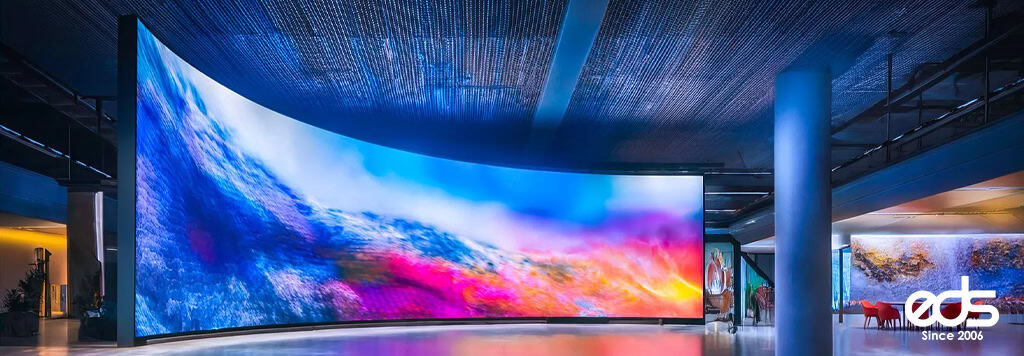
WHAT IS A FLEXIBLE LED SCREEN?
A flexible LED screen is a digital display made using specially designed LED modules that can bend or conform to curved surfaces within the limits of the selected product.
Unlike traditional rigid LED cabinets, flexible LED modules can be installed onto suitable curved supporting structures to create non-flat digital displays.
The modules contain LED pixels that produce images, videos, animations, advertisements and other digital content.
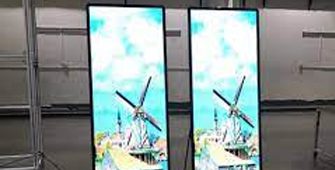
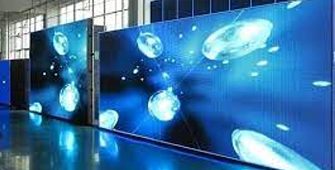
Depending on the product and supporting structure, flexible LED screens can be used to create curved walls, cylindrical displays, column wraps, concave screens, convex screens and selected custom-shaped installations.
The degree of flexibility depends on the module design, minimum bending radius, dimensions and installation requirements.
FLEXIBLE LED SCREEN RATES & COST IN DUBAI, UAE
The cost of a flexible LED screen in Dubai depends on screen dimensions, pixel pitch, module technology, required curvature, supporting structure, controller and installation complexity.
Unlike standard flat LED installations, flexible LED projects may require custom structural work and specialised module arrangements.
ESTIMATED FLEXIBLE LED SCREEN PRICES IN DUBAI
| Flexible LED Screen Type | Indicative Equipment Cost (AED/m²) | Typical Application |
|---|---|---|
| P3–P4 Flexible LED Screen | 3,500–5,500 | Large curved displays |
| P2.5–P3 Flexible LED Screen | 4,000–6,500 | Retail, hospitality |
| P2–P2.5 Flexible LED Screen | 4,500–7,500 | Showrooms, corporate spaces |
| P1.5–P1.8 Fine-Pitch Flexible LED | 6,000–10,000+ | Premium close-viewing applications |
| Cylindrical LED Display | 4,500–8,000+ | Columns, circular installations |
| Custom-Shaped Flexible LED | Based on specification | Architectural and branded displays |
Important: These are indicative equipment-only budgeting estimates, not verified current EDS quotations or fixed UAE market prices. Actual prices vary according to the selected manufacturer, product and project requirements. Installation, supporting structures, controllers, electrical work, maintenance and VAT are generally additional.
FLEXIBLE LED SCREEN INSTALLATION & ADDITIONAL COSTS
| Component | Indicative Cost (AED) |
|---|---|
| Basic Curved LED Installation | 3,000–8,000+ |
| Cylindrical / Column Installation | 5,000–15,000+ |
| Custom Supporting Structure | Based on project requirements |
| LED Controller / Video Processor | 1,500–6,000+ |
| Electrical & Data Cabling | Based on installation |
| Custom Content Mapping | Based on requirements |
| Annual Maintenance | Based on screen size and service scope |
These are preliminary budgeting allowances rather than fixed installation rates.
EXAMPLE: COST OF A 3M × 2M CURVED LED SCREEN
| Description | Estimated Cost |
|---|---|
| Screen Dimensions | 3m × 2m |
| Total Display Area | 6 m² |
| Pixel Pitch | P2.5 |
| Indicative Equipment Rate | AED 4,000–6,500/m² |
| Estimated Equipment Cost | AED 24,000–39,000 |
| Supporting Structure & Installation | Additional |
| Controller & Accessories | Additional |
| Total Project Cost | Subject to final specification |
The final quotation should be prepared after confirming the screen curvature, dimensions, pixel pitch and installation method.
WHAT AFFECTS FLEXIBLE LED SCREEN PRICES?
The main cost factors include total display area, pixel pitch, minimum bending radius, module technology, screen shape, supporting structure, controller, installation complexity and maintenance access.
For example, installing flexible LED on a gently curved wall may involve different structural requirements from creating a complete cylindrical display around a column.
Businesses should compare the complete technical specification and installation scope rather than price per square metre alone.
HOW DOES A FLEXIBLE LED SCREEN WORK?
Flexible LED displays use LED modules constructed with materials and mounting arrangements that allow controlled bending.
Multiple modules are assembled onto a suitable supporting structure to create the required display shape.
A compatible LED controller distributes content across the complete display.
The final screen configuration depends on module dimensions, minimum bend radius, supporting structure, pixel pitch, screen shape and viewing distance.
Flexible LED Modules
Flexible LED modules are designed to accommodate a specified degree of curvature.
However, they cannot necessarily be bent into any imaginable shape.
Every product has physical limitations, and the required curvature must be confirmed before selecting the LED module.
Supporting Structure
The supporting structure determines the final shape of the display.
For example, a cylindrical LED screen requires a supporting frame with the correct diameter and curvature.
LED Controller & Video Processor
The controller manages how digital content is displayed across the modules.
Depending on the configuration, a video processor may also be required for content scaling, multiple inputs and custom display resolutions.
Screen Configuration & Calibration
After installation, the LED modules require configuration and alignment to create a consistent digital display.
For custom-shaped screens, content mapping may also be required to ensure visuals appear correctly across the display surface.
WHAT SHAPES CAN FLEXIBLE LED SCREENS CREATE?
Flexible LED technology can be used for several display configurations, subject to the selected module and supporting structure.
| Display Shape | Description | Common Applications |
|---|---|---|
| Curved LED Screen | Display follows a curved wall or structure | Retail, corporate offices |
| Cylindrical LED Screen | LED modules form a circular display | Malls, hotels, exhibitions |
| Column LED Screen | Digital display wraps around a structural column | Retail, commercial interiors |
| Concave LED Screen | Screen curves inward towards viewers | Experience centres, showrooms |
| Convex LED Screen | Screen curves outward | Architectural features |
| Custom-Shaped LED Screen | Display follows a specially designed structure | Exhibitions, branded installations |
The feasibility of each shape depends on the module’s physical limitations and the supporting structure.
CURVED LED SCREENS IN DUBAI
Curved LED screens are designed to follow the shape of a curved wall or architectural surface.
Unlike a conventional flat screen, a curved display can integrate more naturally into selected interior designs.
Curved LED screens can be suitable for retail stores, shopping malls, corporate offices, showrooms, hospitality environments and experience centres.
The required curvature should be established before selecting the LED technology.
Where Are Curved LED Screens Used?
Common applications include curved retail feature walls, corporate reception areas, hotel interiors, product presentation spaces and architectural installations.
The screen’s curvature, dimensions and viewing distance should be evaluated together to determine the appropriate specification.
CYLINDRICAL LED SCREENS
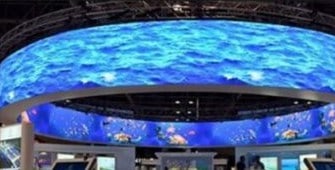
Cylindrical LED screens use flexible LED modules to create a digital display around a circular supporting structure.
Depending on the design, the display may cover the complete circumference or only part of the cylinder.
Cylindrical displays can provide visibility from multiple directions and are particularly relevant to environments where audiences move around the installation.
Potential applications include shopping malls, retail spaces, hotels, exhibitions, commercial interiors and experience centres.
360-DEGREE CYLINDRICAL LED DISPLAYS
A 360-degree cylindrical LED screen can display content around the full circumference of a suitable structure.
These installations can be useful where viewers approach from several directions.
However, the screen diameter is a critical technical consideration because it determines the required bending radius.
The controller, content layout and module configuration should also be planned for the cylindrical shape.
LED SCREENS AROUND COLUMNS
Structural columns can sometimes be transformed into digital display surfaces using flexible LED technology.
Instead of leaving a column as a static architectural element, businesses can use suitable flexible LED modules to display advertisements, brand messages, animations and information.
Column LED displays can be considered for shopping malls, retail stores, hotels, corporate lobbies, exhibition spaces and commercial buildings.
COLUMN LED SCREEN INSTALLATION CONSIDERATIONS
A column installation should consider:
Column diameter and circumference
Display height and total screen area
Required bending radius
LED module dimensions
Pixel pitch and viewing distance
Supporting structure and mounting method
Power and data connectivity
Maintenance access
Accurate measurements are particularly important because small differences in circumference can affect the final module arrangement.
CONCAVE LED SCREENS
A concave LED display curves inward towards the audience.
This configuration can create an immersive visual presentation for suitable applications.
Concave LED screens may be used in experience centres, showrooms, retail spaces, exhibitions and entertainment environments.
The appropriate curvature depends on the audience position, viewing distance, screen dimensions and content.
For immersive applications, the content should be designed specifically for the screen’s shape.
CONVEX LED SCREENS
A convex LED display curves outward.
This can be useful when digital content needs to follow an outward-facing architectural feature or provide visibility from different viewing positions.
Convex LED screens can be considered for retail installations, corporate spaces, commercial interiors and branded architectural displays.
The correct module and supporting structure should be selected according to the required curvature.
CUSTOM-SHAPED FLEXIBLE LED DISPLAYS
Flexible LED modules can support selected custom display concepts where conventional rectangular screens may not be appropriate.
Possible applications include branded installations, architectural features, exhibition structures and experiential displays.
However, not every custom shape is technically achievable.
The feasibility depends on module flexibility, minimum bending radius, screen dimensions, supporting structure, electrical connections and maintenance access.
Custom-shaped installations should be technically evaluated before fabrication begins.
WHERE CAN FLEXIBLE LED SCREENS BE USED?
Flexible LED screens are suitable for commercial environments where the display needs to follow a curved surface or become part of an architectural feature.
| Location | Flexible LED Screen Applications |
|---|---|
| Retail Stores | Curved feature walls, column displays |
| Shopping Malls | Cylindrical screens, atrium installations |
| Hotels | Reception features, curved architectural displays |
| Corporate Offices | Curved reception walls, branded installations |
| Automotive Showrooms | Product launches, curved presentation screens |
| Real Estate Showrooms | Project presentations, immersive displays |
| Exhibitions | Custom stands, cylindrical displays |
| Experience Centres | Immersive visual environments |
| Restaurants | Curved decorative displays, promotions |
| Commercial Buildings | Architectural digital installations |
The technology is particularly relevant where the available surface is curved or where the display is intended to become part of the architecture.
FLEXIBLE LED SCREENS FOR RETAIL STORES
Retail environments can use flexible LED displays to create digital features that integrate with store design.
Possible applications include curved feature walls, column displays, product zones, brand installations and promotional displays.
Content can include product campaigns, new arrivals, brand videos, promotional offers and seasonal content.
For retail installations, the screen should be planned around customer movement and expected viewing distance.
A curved display can be visually distinctive, but its effectiveness also depends on the quality and relevance of the content.
FLEXIBLE LED SCREENS FOR SHOPPING MALLS
Shopping malls can provide suitable environments for larger creative LED installations.
Flexible LED screens may be integrated into columns, curved walls, atriums, retail frontages, promotional areas and architectural features.
Planning should consider audience flow, viewing distance, screen height, curvature, ambient lighting and property requirements.
A display visible from several directions may also require content designed differently from a conventional flat screen viewed primarily from the front.
For businesses seeking advertising placements on existing screens, EDS also provides shopping mall advertising solutions in Dubai.
FLEXIBLE LED SCREENS FOR SHOWROOMS
Automotive, property, technology and other showrooms can use curved LED displays for product presentations, brand films, launches, promotional campaigns and visualisations.
Flexible LED can be particularly useful where showroom architecture contains curved walls or where a conventional rectangular display would appear disconnected from the interior design.
For example, an automotive showroom may use a curved LED wall to present vehicle launch videos and product information.
FLEXIBLE LED SCREENS FOR HOTELS & HOSPITALITY
Hotels and hospitality venues can use flexible LED technology for selected lobbies, reception areas, restaurants, event spaces, entertainment areas and architectural features.
Content may include brand messages, event promotions, guest information, visual artwork and food and beverage campaigns.
In hospitality environments, the physical appearance of the installation when viewed from different angles can be as important as the digital content.
FLEXIBLE LED SCREENS FOR CORPORATE OFFICES
Corporate environments can use flexible LED screens within reception areas, experience centres, corporate lobbies, product demonstration areas and innovation centres.
Content may include corporate videos, branding, product information, presentations and announcements.
For these installations, cable management, supporting structure and overall finish should be carefully planned so the display integrates with the interior.
FLEXIBLE LED SCREENS FOR EXHIBITIONS & EVENTS
Flexible LED displays can be incorporated into custom exhibition stands and experiential installations.
Potential configurations include curved displays, circular features, column displays and custom branded structures.
However, permanent and temporary exhibition applications can have different structural and installation requirements.
For short-term requirements, businesses can also evaluate LED screen rental solutions in Dubai.
UNDERSTANDING FLEXIBLE LED SCREEN CURVE RADIUS
Curve radius is one of the most important technical considerations for a flexible LED installation.
The radius describes the curvature that the LED modules and supporting structure must accommodate.
A tighter curve requires the module to bend around a smaller radius.
Not every flexible LED module can achieve every curve.
For example, a large gently curved wall may be relatively straightforward, while wrapping LED modules around a narrow column may require substantially greater flexibility.
MINIMUM BENDING RADIUS
Each flexible LED module has a specified minimum bending radius.
Attempting to bend a module beyond its permitted range can damage the product or affect display performance.
Before selecting a screen, the required radius, module dimensions, supporting structure and installation method should be confirmed.
HOW IS THE RADIUS OF A CYLINDRICAL LED SCREEN CALCULATED?
For a circular column, the radius can be calculated from its diameter:
Radius = Diameter ÷ 2
Alternatively:
Radius = Circumference ÷ 2π
For example, a column with a diameter of 1 metre has a radius of 0.5 metres, or 500 mm.
The selected LED module must be suitable for the required radius and mounting arrangement.
FLEXIBLE LED SCREEN PIXEL PITCH
Pixel pitch is the distance between neighbouring LED pixels, normally measured in millimetres.
A smaller pixel pitch generally provides greater pixel density, which can be useful for displays viewed from shorter distances.
Flexible LED modules are available in different pixel-pitch configurations depending on the manufacturer and product.
FLEXIBLE LED SCREEN PIXEL PITCH GUIDE
| Pixel Pitch | Typical Application |
|---|---|
| P1.5–P1.8 | Premium close-viewing curved displays |
| P1.8–P2 | Corporate offices, retail features |
| P2–P2.5 | Curved walls, showrooms, reception areas |
| P2.5–P3 | Retail, hospitality, commercial displays |
| P3–P4 | Larger curved displays viewed from greater distances |
| P4–P6 | Selected large-format applications |
These are general planning categories. Actual flexible LED product availability depends on the manufacturer and module design.
The smallest available pixel pitch is not automatically the most suitable choice.
HOW DO I CHOOSE THE RIGHT PIXEL PITCH?
Pixel pitch selection should begin with viewing distance.
A curved LED installation inside a retail store viewed from a few metres away requires a different specification from a large architectural display viewed across an atrium.
Important considerations include minimum viewing distance, typical viewing distance, screen dimensions, content detail, required resolution and budget.
For close-viewing applications containing detailed text or product information, finer pixel pitch may be appropriate.
For larger installations displaying promotional videos and animations, a wider pixel pitch may be sufficient.
FLEXIBLE LED SCREEN RESOLUTION
The native resolution of a flexible LED screen depends on its pixel pitch and physical display dimensions.
Two flexible LED displays of the same physical size can have different resolutions depending on the selected pixel pitch.
Resolution becomes particularly important when displaying text, product details, fine graphics, presentations, data and detailed photography.
For cylindrical and custom-shaped displays, content should be prepared according to the actual pixel layout and screen dimensions.
FLEXIBLE LED SCREEN BRIGHTNESS
Brightness requirements depend on the installation environment.
A curved LED screen in a controlled corporate reception area may require different brightness from one positioned in a brightly illuminated shopping mall.
The correct specification depends on ambient lighting, screen orientation, viewing distance, content and operating hours.
For close-viewing indoor environments, excessive brightness can be uncomfortable and unnecessary.
Brightness should therefore be selected according to actual site conditions.
FLEXIBLE LED SCREEN CONTENT MANAGEMENT
Flexible LED screens can display advertisements, promotional videos, animations, corporate content, product information and announcements.
Depending on the controller and content management system, businesses may be able to update content, schedule campaigns and manage displays remotely.
For curved and cylindrical screens, content mapping may be required to ensure visuals appear correctly across the display surface.
Businesses requiring original branded content can also explore video production and photography services.
CONTENT DESIGN FOR CURVED & CYLINDRICAL LED SCREENS
Content designed for a conventional flat screen may not always be suitable for a curved or cylindrical display.
The screen’s shape influences how audiences view the content.
Design for the Actual Screen Shape
Artwork should be created according to the physical display dimensions and native resolution.
Consider Multiple Viewing Angles
For cylindrical displays, viewers may approach from several directions.
Important messages should therefore be positioned according to the intended audience movement.
Avoid Excessive Text
Complex or detailed text may be difficult to read when viewed across strongly curved surfaces.
Use Suitable Visual Content
Brand animations, product videos, motion graphics and visual effects can be particularly suitable for creative LED installations.
Test Content Before Installation
Content should be tested using the intended screen configuration wherever practical.
FLEXIBLE LED SCREEN INSTALLATION IN DUBAI
Flexible LED installation requirements depend on the screen shape, dimensions, module design and property.
A typical project may involve a site survey, measurements, supporting structure, LED modules, electrical power, data connectivity, controller, cabling, configuration and calibration.
Accurate site measurements are particularly important.
For a column installation, small differences in diameter or circumference can affect the final module arrangement.
The supporting structure should be designed to maintain the required curvature consistently across the complete display.
WALL-MOUNTED CURVED LED SCREENS
Flexible LED modules can be mounted onto suitable curved supporting structures.
The mounting system should maintain the required shape and provide appropriate support for the modules.
Installation planning should consider wall construction, screen weight, module dimensions, ventilation, power, data connectivity and maintenance access.
CYLINDRICAL LED SCREEN INSTALLATION
Cylindrical installations require careful planning because the LED modules must follow the required circular shape.
The main technical considerations include column diameter, circumference, screen height, module dimensions, minimum bending radius, supporting structure and content mapping.
For a full 360-degree display, the total circumference must also be compatible with the selected module configuration.
FLEXIBLE LED SCREEN MAINTENANCE
Flexible LED screens should be designed with future maintenance in mind.
Depending on the installation, maintenance may include module inspection, module replacement, power supply checks, controller checks, cable inspection, cleaning, calibration and software support.
Custom-shaped installations can make maintenance access more challenging than conventional flat screens.
For this reason, access requirements should be incorporated into the initial design.
FLEXIBLE LED SCREEN VS CONVENTIONAL FLAT LED SCREEN
Flexible and conventional LED displays serve different installation requirements.
| Factor | Flexible LED Screen | Conventional Flat LED Screen |
|---|---|---|
| Flat Installation | Possible depending on system | Yes |
| Curved Surfaces | Major advantage | Limited |
| Column Installation | Suitable with correct module | Generally unsuitable |
| Cylindrical Displays | Possible | Difficult |
| Concave/Convex Shapes | Possible depending on product | Limited |
| Supporting Structure | Often custom | Usually simpler |
| Installation Complexity | Can be higher | Generally more straightforward |
| Typical Application | Curved and custom shapes | Standard flat displays |
If the required display is simply a conventional flat rectangle, flexible LED technology may provide little practical advantage.
Its value becomes more apparent when the architecture or creative concept requires the display to curve or follow a non-flat surface.
FLEXIBLE LED VS TRANSPARENT LED
Flexible LED and transparent LED technologies address different requirements.
Flexible LED is primarily selected when the display needs to follow a curved or custom-shaped surface.
Transparent LED is primarily selected when maintaining visibility through glass or through the display is important.
For example, a retail project with a curved solid wall may favour flexible LED technology, while a glass storefront where products need to remain visible may favour transparent LED.
For glass applications, EDS also provides transparent LED screen solutions in Dubai.
FLEXIBLE LED VS MESH LED
Flexible LED and LED mesh displays can also serve different applications.
Flexible LED is particularly useful for columns, curved walls, cylindrical displays and custom indoor features.
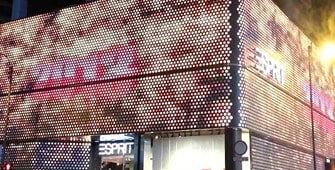
LED mesh displays may be more appropriate for selected large facades, architectural exteriors and large-format installations where openness, weight and airflow are important.
The appropriate technology depends on display dimensions, supporting structure, viewing distance, environment and intended use.
FLEXIBLE LED SCREEN PERMITS, APPROVALS & SAFETY REQUIREMENTS IN UAE
Flexible LED screen installations in Dubai and the UAE must comply with applicable property, building, electrical, structural and fire safety requirements.
The approval process depends on the installation location, screen dimensions, supporting structure and intended use.
For shopping malls, hotels and commercial buildings, property management or landlord permission may be required.
Large suspended, cylindrical or freestanding installations may require additional structural assessment.
Electrical connections, cable management, ventilation, maintenance access and safe pedestrian movement should be considered during the design stage.
For public-facing advertising installations, additional advertising permissions may apply depending on the location and content.
The applicable requirements should be confirmed before equipment procurement and installation.
Conclusion
Flexible LED digital screens represent the future of dynamic and engaging visual communication. With their versatility, high-quality visuals, and ease of installation, these screens offer unparalleled opportunities for businesses in Dubai to captivate their audience and stand out in a competitive market. Trust EDS as your flexible LED digital screen supplier, and let us help you bring your vision to life with our state-of-the-art solutions.
FLEXIBLE LED SCREENS IN DUBAI & UAE – FAQ
What is a flexible LED screen?
A flexible LED screen is a digital display made using specially designed LED modules that can bend or follow curved surfaces within the limits of the selected product. Flexible LED technology is commonly used for curved walls, cylindrical displays, columns and custom-shaped installations in retail stores, shopping malls, hotels and commercial spaces.
How much does a flexible LED screen cost in Dubai?
Indicative equipment-only prices may range from AED 3,500–5,500 per square metre for standard P3–P4 flexible LED screens to AED 6,000–10,000 or more per square metre for fine-pitch models. Actual prices depend on screen dimensions, pixel pitch, curvature, supporting structure and installation requirements. These figures are budgeting estimates rather than fixed quotations.
Can flexible LED screens be installed around columns?
Yes. Flexible LED modules can be used to create digital displays around suitable structural columns. The feasibility depends on column diameter, circumference, module dimensions, minimum bending radius and supporting structure. Accurate measurements are important to ensure the modules follow the required curvature.
Can flexible LED screens create a 360-degree display?
Yes. Suitable flexible LED modules can be configured into cylindrical displays that provide 360-degree visibility. These installations require appropriate module flexibility, supporting structure, controller configuration and content mapping. Cylindrical displays are commonly considered for shopping malls, exhibitions, hotels and commercial interiors.
What is the minimum bending radius of a flexible LED screen?
The minimum bending radius depends on the selected LED module and manufacturer. Not every flexible LED product can achieve the same curvature. The required radius should be confirmed before selecting the screen because bending a module beyond its specified limits can damage the product or affect performance.
What is the difference between flexible LED and conventional LED screens?
Flexible LED screens can follow curved or custom-shaped surfaces, while conventional rigid LED screens are generally designed for flat installations. Flexible LED technology is particularly useful for curved walls, columns and cylindrical displays, whereas conventional LED screens are often more practical for standard rectangular installations.
Are flexible LED screens suitable for shopping malls?
Yes. Flexible LED screens can be used in shopping malls for curved architectural displays, column installations, atrium features, retail promotions and branded content. The installation should consider audience movement, viewing distance, screen height, ambient lighting, structural requirements and property approvals.
What pixel pitch is best for a flexible LED screen?
The appropriate pixel pitch depends on viewing distance, screen dimensions, curvature and content. Finer pixel pitches may suit close-viewing corporate or retail applications, while larger pixel pitches may be suitable for bigger displays viewed from farther away. The selected module must also support the required bending radius.
Can flexible LED screens display videos and animations?
Yes. Flexible LED screens can display videos, animations, advertisements, product information, presentations and other compatible digital content. Custom-shaped and cylindrical installations may require content mapping to ensure visuals appear correctly across the display surface.
Can flexible LED screens be used for exhibitions and events?
Yes. Flexible LED screens can be incorporated into exhibition stands, product launches, branded installations and event displays. Possible configurations include curved screens, circular features, cylindrical displays and custom-shaped structures. Temporary installations should be planned according to the required shape, structural support and event duration.
Do flexible LED screens require maintenance?
Yes. Maintenance may include LED module inspections, power supply checks, controller checks, cable inspections, cleaning, calibration and component replacement. Custom-shaped installations should be designed with suitable maintenance access because servicing curved or cylindrical displays can be more challenging than conventional flat screens.
Does EDS supply and install flexible LED screens in Dubai and UAE?
Yes. Established in Dubai in 2006, EDS provides flexible LED display solutions for businesses across Dubai, Abu Dhabi, Sharjah and other UAE emirates. Depending on the project scope, services can include screen selection, technical planning, equipment supply, installation, configuration and maintenance support.