
DIGITAL MARKETING


Website Design & Development Company in Dubai, UAE
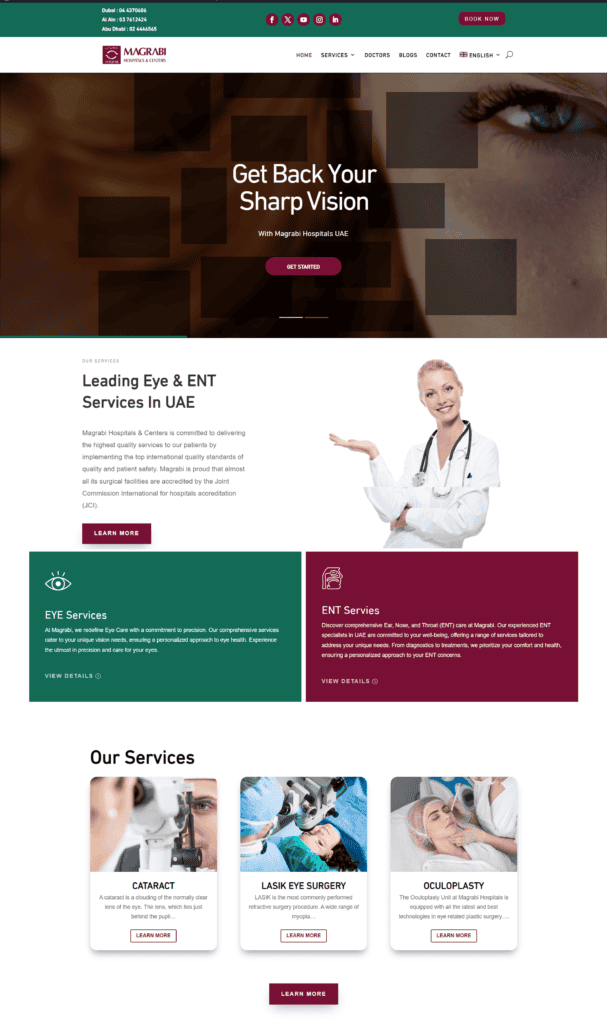
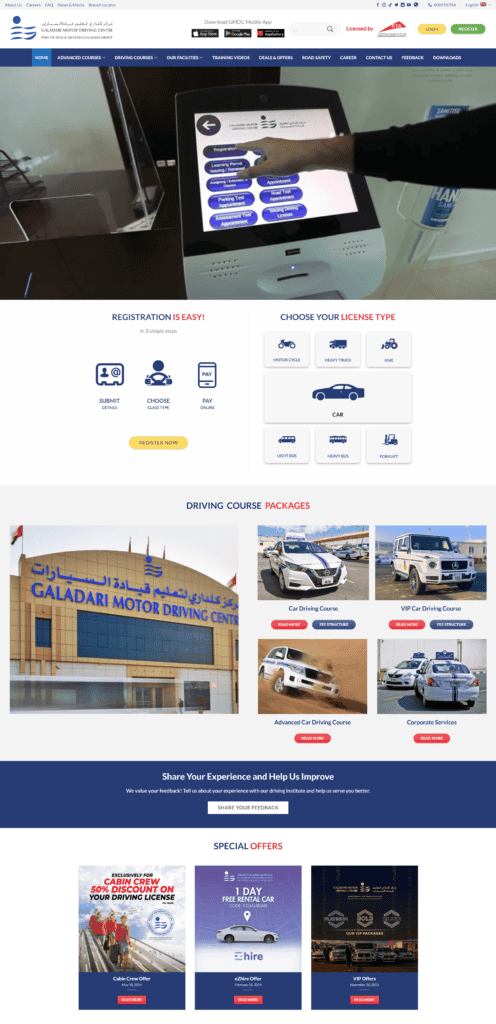
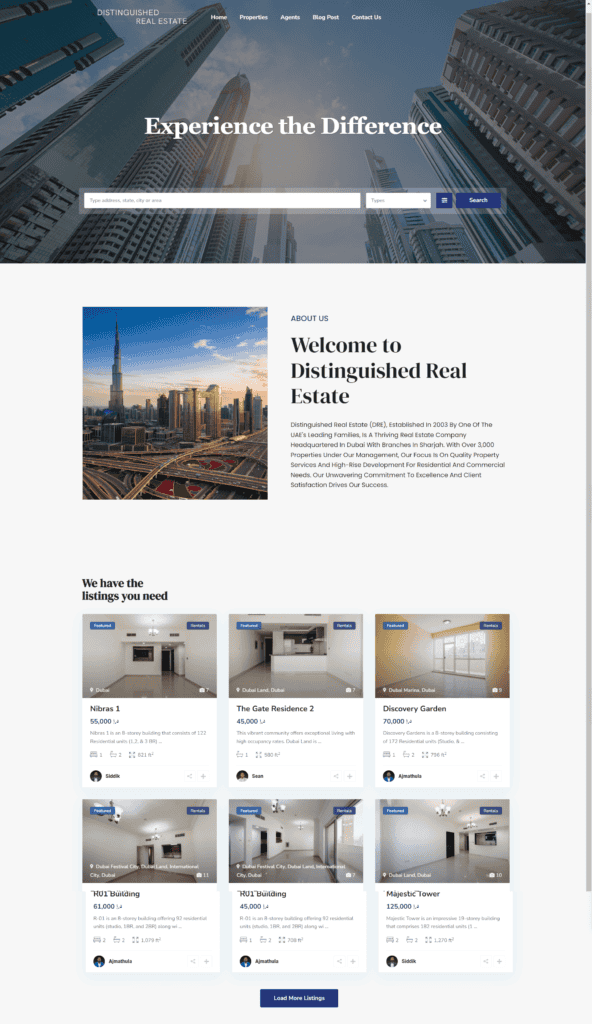
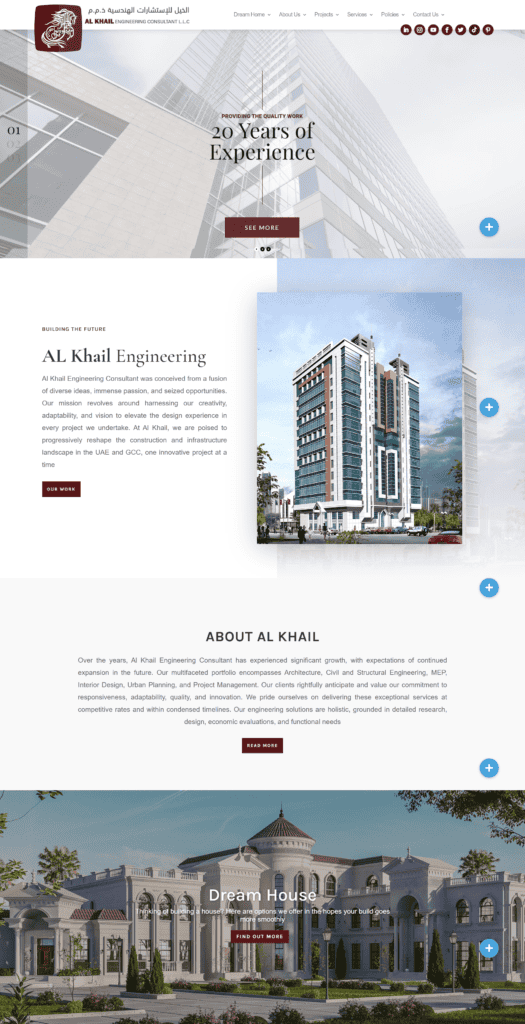
Website design and development in Dubai and the UAE involves creating responsive, secure and functional websites that represent a business, communicate its services and support customer enquiries, bookings or online transactions. A professionally developed website should combine visual design, user experience, technical performance, search engine accessibility and reliable functionality across desktop and mobile devices.
EDS provides website design and development services in Dubai, Abu Dhabi, Sharjah and across the UAE, including corporate websites, WordPress development, e-commerce websites, WooCommerce stores, landing pages, website redesign, content management systems, website maintenance and SEO-friendly website development.
Established in Dubai in 2006, EDS combines website development with its experience in advertising, media buying and digital marketing services, helping businesses develop websites that can support organic search, digital advertising and customer acquisition.
Website requirements differ according to business size, industry, functionality, content volume, languages and integrations. A small corporate website may require only a few service pages, while a larger e-commerce or business platform may involve hundreds of pages, payment systems, customer accounts and custom development.
WEBSITE DESIGN & DEVELOPMENT SERVICES IN DUBAI & UAE
Custom Website Development
We design and develop fully customized websites that reflect your brand identity, resonate with your target audience
Content Management Systems (CMS)
We empower you to manage and update your website effortlessly with intuitive content management systems such as WordPress, Drupal, and Joomla.
Search Engine Optimization (SEO)
We optimize your website for search engines to improve its visibility and ranking in search results. From keyword research to on-page optimization and link building
E-Commerce Website Development
We provide comprehensive e-commerce solutions that drive sales, streamline processes, and enhance the shopping experience for your customers.
Website Penetration Testing
we specialize in providing top-tier penetration testing services for websites and web applications globally
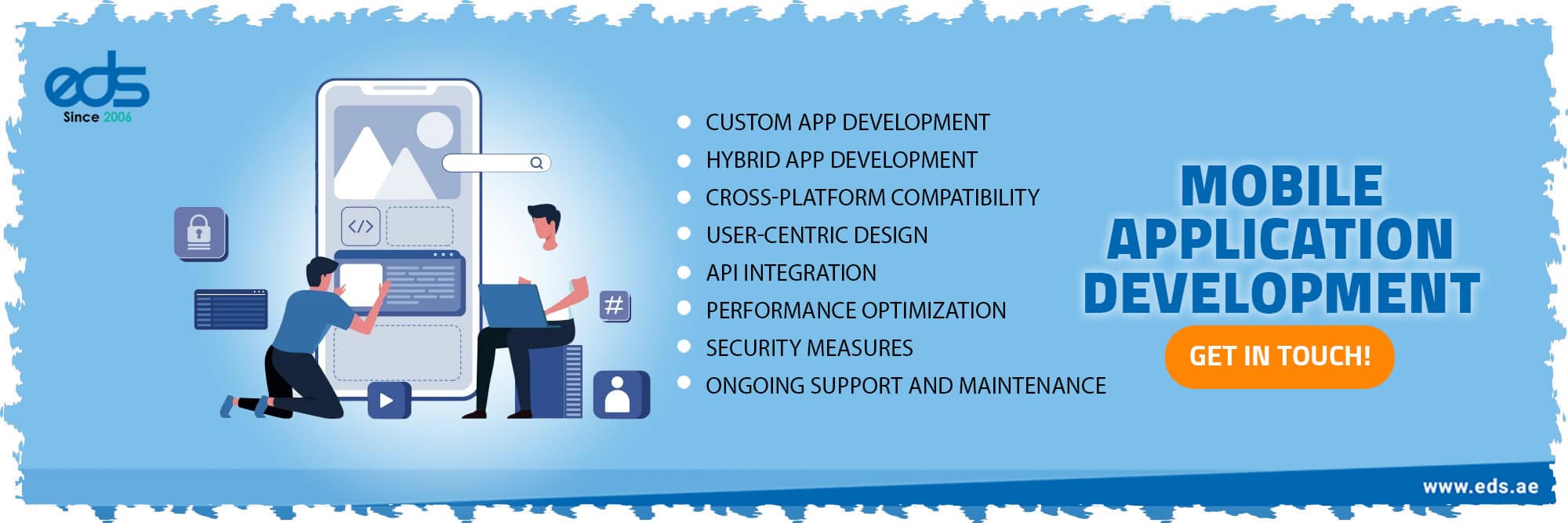
Mobile Application Development
we offer cutting-edge mobile app development services designed to bring your ideas to life.
Website Maintenance & Support
We provide ongoing maintenance and support services to ensure that your website remains secure, up-to-date, and optimized for performance.
WEBSITE DESIGN & DEVELOPMENT COSTS IN DUBAI & UAE
Website development prices in Dubai vary according to website type, page count, design complexity, functionality, content requirements, platform and integration needs.
The following are indicative UAE market planning ranges, not fixed EDS prices or guaranteed market quotations. EDS website packages start at approximately AED 5,000; lower market estimates do not represent EDS package prices.
| Website Type | Indicative Cost (AED) | Typical Scope |
|---|---|---|
| Basic Business Website | 2,500–5,000 | Small informational website |
| Corporate Website | 5,000–12,000 | Multiple company and service pages |
| Custom Corporate Website | 10,000–25,000+ | Custom layouts and advanced functionality |
| WordPress Website | 3,500–12,000+ | CMS-based website |
| WooCommerce Website | 7,000–20,000+ | Online store with standard commerce functions |
| Advanced E-commerce Website | 15,000–50,000+ | Larger catalogues and integrations |
| Campaign Landing Page | 1,000–3,500+ | Single-purpose conversion page |
| Website Redesign | 3,000–15,000+ | Existing website improvements |
| Custom Web Application | 25,000–100,000+ | Bespoke functionality and integrations |
| Website Maintenance | 300–1,500+ per month | Scope-dependent technical support |
Actual project costs may be higher or lower depending on specifications, third-party licensing and the agreed scope of work.
What Determines Website Development Costs?
The main cost considerations include website page count, custom design requirements, content development, e-commerce features, language versions, API integrations, payment gateways, hosting infrastructure and ongoing support.
A website with five informational pages generally requires fewer development resources than a multilingual e-commerce website with thousands of products.
Additional Website Costs to Consider
| Cost Component | Considerations |
|---|---|
| Domain Registration | Domain extension and renewal fees |
| Website Hosting | Server resources, traffic and support |
| SSL Certificate | Security certificate and hosting arrangements |
| Premium Themes & Plugins | Licensing and renewal costs |
| Website Content Writing | Number and complexity of pages |
| Product Data Entry | Product volume and attributes |
| Photography & Video | Original visual content production |
| Payment Gateway | Provider fees and transaction charges |
| Translation | Language and content volume |
| Maintenance | Updates, backups and technical support |
Some of these items may be included in a development quotation, while others are billed separately.
WORDPRESS VS CUSTOM WEBSITE DEVELOPMENT
WordPress and custom website development serve different business requirements.
| Feature | WordPress Website | Custom Website |
|---|---|---|
| Primary Use | Content-driven and standard business websites | Specialised platforms and unique functionality |
| Content Management | Built-in CMS | Depends on development architecture |
| Design Flexibility | Themes and custom templates | Highly flexible |
| Plugins & Extensions | Extensive ecosystem | Custom or framework-based integrations |
| Initial Development Cost | Often lower for standard websites | Often higher for bespoke projects |
| Development Time | Depends on customisation | Depends on complexity |
| Maintenance | Core, theme and plugin updates | Application and infrastructure maintenance |
| Scalability | Depends on architecture and hosting | Depends on architecture and implementation |
Neither approach is universally superior. The appropriate choice depends on the project’s functional requirements, budget and long-term technical needs.
E-COMMERCE WEBSITE DEVELOPMENT IN DUBAI
An e-commerce website requires more than an attractive product catalogue. It must support product discovery, transactions, fulfilment and customer communication.
Product Catalogue & Categories
Products should be organised into logical categories with clear descriptions, images, specifications, pricing and availability information.
Shopping Cart & Checkout
Checkout functionality should allow customers to review their orders, provide delivery details and complete payment through supported methods.
UAE Payment Gateway Integration
E-commerce websites may integrate with suitable payment service providers supporting relevant payment methods.
Gateway availability, merchant approval, settlement terms and transaction charges depend on the provider and business eligibility.
Delivery & Shipping Integration
Online stores may require delivery zones, shipping charges, courier integrations and order tracking.
Inventory & Order Management
Product stock levels, order status and customer notifications can be managed through the commerce platform or compatible third-party systems.
Arabic & English E-commerce Websites
Businesses serving multilingual audiences may require separate language content, translated product information and suitable right-to-left layouts for Arabic.
E-commerce SEO
Search-friendly product categories, descriptive product pages, structured data and technical indexing can help online stores become more discoverable.
EDS also provides digital marketing services for e-commerce businesses in Dubai.
WEBSITE DESIGN VS WEBSITE DEVELOPMENT
Website design and website development are related but distinct disciplines.
Website Design
Website design focuses on how a website looks and how visitors interact with its pages.
It includes page layouts, typography, colour schemes, imagery, navigation, visual hierarchy and user interface design.
Website Development
Website development involves implementing the website’s technical functionality.
It includes content management systems, programming, databases, forms, payment integrations, responsive behaviour and server-side configuration.
| Website Design | Website Development |
|---|---|
| Visual layouts and branding | Front-end and back-end functionality |
| User interface design | CMS configuration |
| Navigation and page presentation | Database and API integrations |
| Mobile layout design | Responsive implementation |
| Typography and imagery | Form and checkout functionality |
| User experience | Technical testing and deployment |
A business website requires both effective design and reliable technical implementation.
UI/UX DESIGN & MOBILE-FIRST WEBSITE DEVELOPMENT
User Interface (UI) and User Experience (UX) design influence how easily visitors understand and interact with a website.
Website Navigation
Navigation should allow visitors to locate services, products, company information and contact details without unnecessary complexity.
Mobile-First Design
Mobile-first design prioritises the experience on smaller screens, where space and interaction methods differ from desktop browsing.
Readable Content Layouts
Clear headings, appropriate spacing, readable typography and logical content sections improve website usability.
Website Accessibility
Accessible website development considers keyboard navigation, readable contrast, alternative image text, appropriate form labels and other accessibility requirements.
Conversion-Focused Design
Conversion-focused design helps visitors complete relevant actions, such as submitting an enquiry, requesting a quotation, registering for an event or making a purchase.
Conversion rates depend on the offer, audience, content and overall customer experience, not visual design alone.
SEO-FRIENDLY WEBSITE DESIGN & DEVELOPMENT
Search Engine Optimization should be considered during website architecture and development rather than only after the website is launched.
An SEO-friendly website makes relevant content accessible to search engines and understandable to visitors.
Website Architecture & URL Structure
A logical website structure groups related pages and uses clear, descriptive URLs.
H1, H2 & H3 Heading Structure
Headings help organise website content into understandable sections.
Pages should use meaningful semantic headings rather than selecting heading levels only for visual styling.
Meta Titles & Descriptions
Each important page should have a relevant title and descriptive metadata reflecting its actual content.
Internal Linking
Contextual internal links connect related pages and help users discover additional information.
Image Optimization
Appropriately sized images, descriptive filenames and relevant alternative text can improve accessibility and page performance.
Technical Indexing
Search engines should be able to access intended public pages without accidental blocking, incorrect noindex directives or unnecessary technical barriers.
Structured Data
Applicable structured data can help search engines interpret website information, such as organisation details, breadcrumbs, products or articles.
Structured data must accurately reflect the content and does not guarantee enhanced search appearances.
Website Speed & Core Web Vitals
Website performance considerations include image delivery, hosting response, script loading and layout stability.
Google’s Core Web Vitals assess loading performance, responsiveness and visual stability.
For ongoing optimisation, EDS also provides SEO services in Dubai and UAE.
WEBSITE DEVELOPMENT FOR GOOGLE AI OVERVIEWS, AI MODE & CHATGPT
Website discoverability now extends beyond conventional search engine result pages.
Google AI Overviews, AI Mode and AI-powered search experiences such as ChatGPT may help users research companies, compare services and find information.
Website development can support discoverability by ensuring that important content is accessible, clearly structured and technically understandable.
Search-Accessible Website Content
Important business information should be available in accessible webpage content rather than being unnecessarily hidden inside images, inaccessible scripts or restricted interfaces.
Clear Service & Product Information
Websites should explain their products, services, specifications, geographic coverage and relevant commercial information.
Structured Information & Comparison Tables
Well-organised content, tables, descriptive headings and accurate factual information can make complex topics easier for visitors and search systems to interpret.
Business Identity & Credibility
Consistent company information, accurate contact details, relevant credentials and genuine business information can help users assess a website.
AI Search & JavaScript Rendering
Websites relying heavily on JavaScript should be tested to ensure that important content can be rendered and accessed by relevant search systems.
Google documents how it crawls, renders and indexes JavaScript-based websites.
AI Search Visibility Limitations
Website design and development alone cannot guarantee rankings, inclusion in Google AI Overviews or citations in ChatGPT.
Search visibility also depends on content relevance, source availability, search engine systems and other factors outside the developer’s control.
WEBSITE REDESIGN, MIGRATION & SEO PRESERVATION
Businesses may need to redesign their websites because of outdated branding, poor mobile usability, technical limitations, security issues or changing business requirements.
Website redesigns should consider existing search visibility and content before replacing the current site.
Existing URL Preservation
Important URLs should be retained where practical, especially when they already receive organic traffic or external links.
301 Redirects
When URLs must change, appropriate permanent redirects can help users and search engines find the replacement pages.
Content Migration
Important service information, product content, metadata and other relevant material should be reviewed before migration.
Domain & Hosting Migration
Changes to hosting infrastructure or domain names require careful configuration of DNS, SSL, redirects and website accessibility.
Post-Launch Search Monitoring
Google Search Console and analytics tools can help identify indexing problems, traffic changes and other issues following a redesign.
A website migration may still result in temporary search visibility fluctuations, even when technically managed.
WEBSITE HOSTING, DOMAIN, SSL & SECURITY
Website performance and reliability depend partly on the hosting environment and technical configuration.
Domain Registration
Businesses may use suitable domain extensions such as .ae, .com or other relevant extensions, subject to registration requirements and availability.
Website Hosting
Hosting options can include shared hosting, managed WordPress hosting, virtual private servers, cloud hosting and dedicated infrastructure.
The appropriate hosting environment depends on traffic, website complexity, security requirements and operational needs.
SSL & HTTPS
HTTPS helps encrypt communication between a visitor’s browser and the website.
An SSL/TLS certificate should be configured correctly and renewed as required.
Website Backups
Regular backups help support website recovery following technical failures, accidental changes or security incidents.
Backup frequency and retention should reflect the website’s update frequency and business requirements.
Website Security
Security measures can include software updates, access controls, multifactor authentication, vulnerability management, malware monitoring and appropriate server configuration.
Website Penetration Testing
Penetration testing involves authorised security assessments designed to identify exploitable weaknesses in a website or application.
Where required, the testing scope, methodology and reporting should be agreed separately from routine website development.
WEBSITE INTEGRATIONS & BUSINESS FUNCTIONALITY
Business websites may need to exchange information with other software platforms.
| Integration | Common Website Application |
|---|---|
| CRM Systems | Lead capture and customer records |
| ERP Systems | Product, inventory and operational data |
| Payment Gateways | Online payment processing |
| Booking Systems | Appointments and reservations |
| Email Marketing Platforms | Newsletter subscriptions and campaigns |
| Customer enquiries and communication | |
| Analytics Platforms | Website usage and conversion measurement |
| Live Chat | Customer support |
| Courier Systems | Shipping and delivery tracking |
| Marketing Automation | Lead nurturing and customer communications |
Integration feasibility depends on the relevant provider’s API, licensing, technical documentation and security requirements.
WEBSITE DEVELOPMENT FOR DIFFERENT INDUSTRIES IN UAE
Real Estate Website Development
Real estate websites may require property listings, project pages, location filters, image galleries, enquiry forms, maps and agent contact information.
Healthcare & Clinic Website Development
Healthcare websites can include medical specialty pages, doctor profiles, appointment requests, clinic locations and patient information.
Healthcare content and functionality must reflect applicable regulatory and privacy requirements.
Hospitality & Hotel Website Development
Hotel and hospitality websites may include accommodation information, facilities, booking integrations, restaurant menus, image galleries and multilingual content.
Restaurant Website Development
Restaurant websites may require menus, table reservation links, delivery information, branch locations and promotional pages.
Education Website Development
Schools, universities and training providers may require programme pages, admissions information, enquiry forms, course catalogues and event registration.
Corporate & Professional Services Websites
Corporate websites can include service descriptions, industry expertise, team profiles, case studies and contact information.
Manufacturing & Industrial Websites
Industrial websites may need technical specifications, product catalogues, downloadable brochures, certification information and quotation forms.
Retail & E-commerce Websites
Retail websites may include online product catalogues, inventory management, payment processing, customer accounts and order fulfilment functionality.
WEBSITE DEVELOPMENT TIMELINES IN DUBAI
Website development timelines depend on project scope, content availability, design requirements, integrations, approvals and testing.
The following are illustrative planning estimates rather than guaranteed delivery schedules.
| Website Type | Indicative Development Timeline |
|---|---|
| Campaign Landing Page | 3–10 working days |
| Basic Business Website | 2–4 weeks |
| Corporate Website | 4–8 weeks |
| Custom Corporate Website | 6–12 weeks |
| Standard E-commerce Website | 6–12 weeks |
| Advanced E-commerce Website | 10–20+ weeks |
| Custom Web Application | Project-specific |
Projects requiring extensive content development, multilingual functionality, complex integrations or external approvals may take longer.
WEBSITE CONTENT, PHOTOGRAPHY & VIDEO REQUIREMENTS
Website development often requires a combination of written content, photography, graphics and other media.
Website Copywriting
Content may include company information, service descriptions, product details, industry pages, FAQs and relevant legal information.
Corporate Photography
Original photographs can help present offices, facilities, products, employees and business operations.
Product Photography
E-commerce websites may require consistent product images, multiple viewing angles and suitable image optimisation.
Corporate Videos
Videos can present products, services, facilities and business information where relevant.
Arabic & English Website Content
Multilingual websites may require professional translation, localised terminology and right-to-left layout support for Arabic.
EDS also provides integrated advertising and digital marketing services that can complement website content and digital campaigns.
WEBSITE MAINTENANCE & ONGOING TECHNICAL SUPPORT
Website maintenance helps keep a live website functional, secure and compatible with its software environment.
Typical maintenance requirements include:
WordPress core, theme and plugin updates
Website backups and recovery checks
Malware and vulnerability monitoring
Contact form and email delivery checks
Broken-link and error correction
Website performance reviews
Content updates
Hosting and SSL monitoring
E-commerce functionality checks
Compatibility testing following updates
Maintenance agreements should specify the included services, support hours, response expectations, backup responsibilities and exclusions.
WEBSITE DESIGN & DEVELOPMENT RULES, DATA PROTECTION & UAE COMPLIANCE
Websites operating in Dubai and the UAE should consider applicable business, privacy, e-commerce, consumer protection and industry-specific requirements.
UAE Personal Data Protection
Websites collecting personal information through contact forms, customer accounts, subscriptions or online transactions should assess applicable data-protection obligations.
This may include the UAE Federal Personal Data Protection Law and, where relevant, DIFC or ADGM data-protection regimes.
Privacy Policies & Data Collection
Privacy notices should accurately explain relevant personal data collection and processing activities, where legally required.
Cookies & Analytics
Analytics, advertising pixels and other tracking technologies should be configured in accordance with applicable privacy requirements and the technologies actually used.
E-commerce & Consumer Information
Online stores should provide accurate product information, pricing, payment terms, delivery conditions and applicable return or refund information.
Payment Security
Websites accepting online payments should use appropriate payment infrastructure and comply with relevant payment-provider and security requirements.
Copyright & Intellectual Property
Website text, images, videos, logos and other materials must be used with appropriate ownership rights or permissions.
Website Accessibility
Businesses should consider accessibility standards and any applicable sector-specific requirements when designing public-facing digital services.
Industry-Specific Regulations
Healthcare, financial services, real estate, education and other regulated industries may have additional requirements concerning website content, disclosures and promotional claims.
Website Ownership & Commercial Agreements
Website development contracts should clarify domain ownership, hosting access, intellectual property, source-code rights, software licences, maintenance responsibilities and handover arrangements.
WEBSITE DESIGN & DEVELOPMENT IN DUBAI & UAE – FAQ
How much does website design and development cost in Dubai?
Website development costs depend on the number of pages, design requirements, functionality, platform and integrations. EDS website packages start at approximately AED 5,000, while larger corporate websites, e-commerce stores and custom platforms can cost substantially more. Actual pricing depends on the project scope.
How long does it take to develop a website in UAE?
A basic business website may take approximately 2–4 weeks, while a corporate website may require 4–8 weeks. E-commerce and custom websites can take longer depending on integrations, content availability and technical requirements. These are planning estimates, not guaranteed delivery periods.
Does EDS provide WordPress website development in Dubai?
Yes. EDS provides WordPress website design and development services for corporate websites, business websites and content-driven platforms. Services can include theme customisation, page development, responsive layouts, content management system configuration and website maintenance.
Can EDS develop an e-commerce website with online payment integration?
Yes. EDS provides e-commerce website development services that can include product catalogues, shopping carts, checkout functionality and compatible payment gateway integrations. Available features depend on the selected platform, payment provider and project specifications.
What is the difference between website design and website development?
Website design focuses on visual layouts, branding, navigation and user experience. Website development implements the technical functionality, including content management systems, forms, databases, e-commerce features and third-party integrations.
Can you redesign my existing website without losing Google rankings?
Website redesigns can be planned to preserve important URLs, content, metadata and redirects. However, search rankings are controlled by search engines, and no agency can guarantee that rankings or traffic will remain unchanged after a redesign or migration.
Will my website be mobile-friendly and responsive?
Yes. Responsive website development allows a website to adapt to different screen sizes and devices. Mobile usability, navigation, typography, images and functionality should be tested across relevant devices before launch.
Can website development help with Google SEO and AI search visibility?
SEO-friendly website development can improve website structure, crawlability, page performance and content accessibility. These features may support organic search visibility, Google AI Overviews, AI Mode and ChatGPT discoverability. However, website development alone cannot guarantee rankings or AI search citations.
Can EDS develop websites in both English and Arabic?
Yes. Multilingual website requirements can include English and Arabic content, language navigation, right-to-left layouts, translated page structures and appropriate technical configuration. The final scope depends on the project requirements.
Can I update my website content after development?
Yes. Websites built on content management systems such as WordPress allow authorised users to update text, images, pages and other supported content without programming knowledge. Available editing capabilities depend on the website configuration and access permissions.
Does EDS provide website hosting and maintenance services?
Yes. Website hosting, technical support and maintenance can be arranged according to the agreed project scope. Services may include software updates, backups, troubleshooting, content changes and hosting coordination. Hosting specifications, renewal charges and maintenance terms should be confirmed in the quotation.
Does EDS provide website design and development services across UAE?
Yes. Established in Dubai in 2006, EDS provides website design and development services for businesses in Dubai, Abu Dhabi, Sharjah and other UAE emirates. Services include corporate websites, WordPress development, e-commerce websites, landing pages, website redesign and maintenance.