
DIGITAL MARKETING


Bus Shelter Advertising in Dubai, Bus Shelter Advertising
WHAT IS BUS SHELTER ADVERTISING?
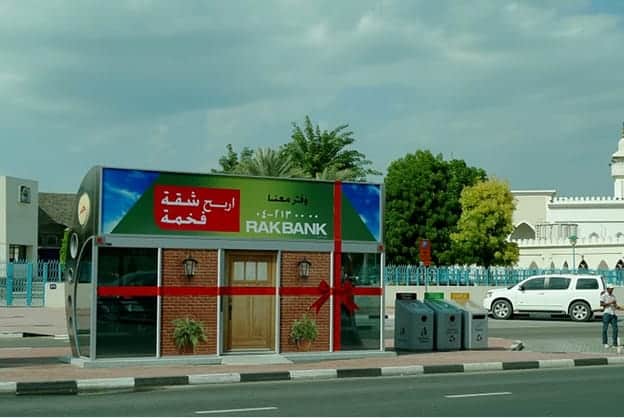
Bus shelter advertising involves placing approved advertising displays within or around bus shelters and bus stops.
Depending on the individual shelter and available media inventory, formats can include:
Static Advertising Panels • Backlit Advertising Displays • Digital Advertising Screens • Shelter Branding • Special Creative Executions Where Available
Bus shelter advertising combines several characteristics:
Street-Level Visibility • Fixed Geographic Position • Close-Range Viewing • Passenger Dwell Time • Repeated Local Exposure
The exact advertising format available depends on the individual shelter, location, media network and campaign period.
BUS STOP SHELTER ADVERTISING COSTS & RATES IN DUBAI
How much does bus stop shelter advertising cost in Dubai? Costs vary according to the shelter location, advertising format, number of shelters, campaign duration, production requirements and current media availability.
Static poster panels, backlit displays, digital screens and multi-location shelter campaigns are priced differently according to the specifications and commercial terms of the selected advertising assets.
| Bus Stop Shelter Advertising Type | Typical Locations | Estimated Monthly Cost (AED) | Typical Application |
|---|---|---|---|
| Standard Bus Shelter Poster Panel | Residential areas & local roads | AED 3,000 – 8,000 per shelter | Local businesses & community campaigns |
| Premium Bus Shelter Advertising | Main roads & commercial districts | AED 8,000 – 15,000 per shelter | Brand awareness & customer acquisition |
| Backlit Bus Shelter Display | High-traffic commuter locations | AED 10,000 – 20,000 per shelter | Retail, FMCG & lifestyle brands |
| Digital Bus Shelter Screen | Smart shelters & premium locations | AED 15,000 – 40,000+ per screen | Dynamic campaigns & multiple creatives |
| Premium Location Shelter Branding | Downtown Dubai, Business Bay, Marina areas | AED 20,000 – 50,000+ per shelter | Luxury brands & major campaigns |
| Bus Shelter Network Campaign – 10–50 Shelters | Multiple Dubai locations | AED 100,000 – 500,000+ per campaign | City-wide brand visibility |
Bus shelter advertising rates are indicative estimates and vary depending on shelter location, pedestrian traffic, audience profile, display format (static/digital), campaign duration, production, installation and current media availability.
What Affects Bus Shelter Advertising Costs?
Shelter Location: Advertising in a premium commercial, retail or high-footfall environment can have different commercial terms from a local residential location.
Advertising Format: Static, backlit, digital and larger shelter-branding executions have different pricing structures.
Number of Shelters: A single-location campaign is priced differently from a network of 10, 20, 50 or more locations.
Audience Environment: Passenger activity, pedestrian movement, surrounding businesses and nearby destinations can influence the commercial value of a location.
Campaign Duration: Media terms can vary according to the length of the booking.
Production: Static and backlit campaigns require correctly sized printed material.
Installation: Installation and removal requirements depend on the selected media format.
Digital Share of Voice: For digital screens, pricing can depend on spot duration, advertising rotation, frequency and Share of Voice.
Availability: Premium shelters may already be booked during the required campaign dates.
For an accurate quotation, advertisers should provide:
Campaign Dates • Preferred Areas • Target Audience • Number of Shelters • Static or Digital Preference • Campaign Duration • Approximate Budget
TYPES OF BUS SHELTER ADVERTISING IN DUBAI
Static Bus Shelter Advertising
Static advertising typically uses printed creative displayed within an approved advertising panel.
The advertising face generally provides continuous display of the advertiser’s creative during the booked campaign period.
Static shelter advertising can be relevant for:
Brand Awareness • Retail • Real Estate • Restaurants • Events • Product Campaigns • Community Advertising
The exact dimensions depend on the selected shelter and media specifications.
Backlit Bus Shelter Advertising
Backlit displays use illumination behind the advertising creative to improve visibility, particularly during evening and lower-light conditions.
They combine the fixed geographic positioning of a conventional shelter panel with an illuminated presentation.
Availability depends on the individual shelter and current media inventory.
Digital Bus Shelter Advertising
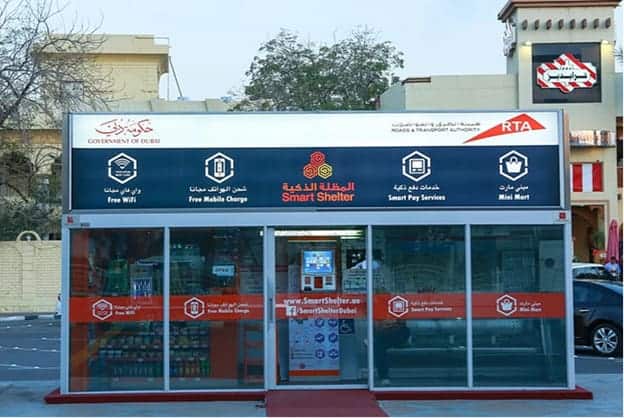
Selected shelters can incorporate digital advertising screens.
Where digital inventory is available, potential capabilities can include:
Multiple Creatives • Creative Rotation • Scheduled Messaging • Faster Creative Changes • Motion Where Permitted
Advertisers should evaluate a digital shelter according to:
Location • Screen Size • Screen Position • Spot Duration • Advertising Loop • Frequency • Share of Voice
A digital screen should not be evaluated solely by the fact that it is digital.
Premium Shelter Branding
Selected advertising environments can potentially support enhanced creative treatments or broader shelter branding, subject to the specifications of the individual media asset.
Such executions may provide a larger creative presence than a standard poster panel.
Availability should be confirmed before the campaign concept and artwork are finalised.
BUS SHELTER ADVERTISING LOCATIONS IN DUBAI
Bus shelter advertising opportunities can potentially be available across selected residential, commercial, retail and high-footfall areas of Dubai.
Potential targeting areas can include:
Downtown Dubai • Business Bay • Dubai Marina • JBR • Jumeirah • Jumeirah Lake Towers • Bur Dubai • Deira • Karama • Al Barsha • Dubai Silicon Oasis • Mirdif • Residential Communities • Commercial Districts • Retail Destinations • Areas Surrounding Major Attractions
Not every bus shelter or bus stop is commercially available for advertising.
Availability changes according to the media network, individual shelter, campaign dates and existing bookings.
DUBAI’S BUS SHELTER NETWORK
Dubai’s bus shelter network forms part of the city’s wider public-transport infrastructure.
The current page notes that the RTA reported in 2026 that 726 bus shelters had been completed under its shelter-development programme, with shelters categorised according to passenger usage. bus sheleter
For advertisers, however, the total number of shelters should not be interpreted as the number of commercially available advertising locations.
Only selected shelters incorporate authorised advertising inventory, and commercial availability can vary by location and campaign period.
The more useful question for an advertiser is therefore not simply:
“How many bus shelters are there in Dubai?”
but:
“Which commercially available shelters reach the audience and geographic areas relevant to my campaign?”
HOW TO SELECT BUS SHELTER ADVERTISING LOCATIONS
Because bus shelter advertising is location-based, site selection is one of the most important parts of the campaign.
Target Audience
Identify who the campaign needs to reach:
Residents • Commuters • Shoppers • Office Workers • Tourists • Students • Families • Motorists
Geographic Relevance
A shelter located close to the advertiser’s target community, store, restaurant, clinic, development or destination can sometimes be more relevant than a higher-profile location elsewhere in Dubai.
Passenger Activity
Consider the role of the individual bus stop and surrounding transport activity.
Pedestrian Movement
Some shelter locations can also provide visibility to pedestrians passing through the surrounding area.
Road Visibility
Depending on orientation, certain shelter advertising panels can also be visible to passing motorists.
Nearby Destinations
Consider proximity to:
Shopping Areas • Offices • Residential Communities • Hotels • Attractions • Schools • Healthcare Facilities • Restaurants • Transport Interchanges
Viewing Direction
The orientation of the advertising face matters. Two panels at the same shelter can potentially address different viewing directions.
Static or Digital Availability
Not every shelter offers every advertising format.
The campaign should be planned around actual available inventory rather than an assumed format.
BUS SHELTER ADVERTISING FOR LOCAL & CITY-WIDE CAMPAIGNS
Bus shelter advertising can be used at different geographic scales.
Local Campaigns
A smaller number of strategically selected shelters can concentrate visibility around:
Specific Communities • Retail Catchments • Restaurants • Clinics • Schools • Property Developments • Local Service Areas
For these campaigns, geographic relevance can be more important than the total number of advertising panels.
Multi-Location Campaigns
Larger campaigns can use multiple shelters across different parts of Dubai to create broader street-level visibility.
A network campaign should be evaluated according to:
Number of Shelters • Distribution of Locations • Audience Relevance • Advertising Format • Campaign Duration
A campaign with fewer well-selected locations can sometimes be more relevant than a larger network that is poorly aligned with the target audience.
BUS SHELTER VS BUS WRAP ADVERTISING
Bus shelter and bus advertising are both transit-media formats, but they provide fundamentally different types of exposure.
| Consideration | Bus Shelter Advertising | Bus Wrap Advertising |
|---|---|---|
| Media Position | Fixed | Mobile |
| Geographic Exposure | Specific location | Route/network dependent |
| Primary Audience | Passengers, pedestrians & nearby road users | Motorists, pedestrians & road users |
| Viewing Environment | Street level | Moving vehicle |
| Viewing Time | Potentially longer | Generally shorter |
| Creative Format | Panel or screen | Vehicle surface |
| Main Strength | Geographic targeting | Mobile route-based visibility |
| Typical Use | Local & location-specific campaigns | Broader route-based campaigns |
Neither format is inherently better.
The appropriate option depends on whether the advertiser needs fixed geographic presence or mobile exposure across a transport network.
BUS SHELTER VS MUPI ADVERTISING
Bus shelters and MUPIs can both provide street-level advertising, but they should not automatically be treated as the same format.
Bus Shelter Advertising
Bus shelter advertising is integrated with or positioned around a public-transport waiting environment.
The audience can include:
Bus Passengers • Pedestrians • Nearby Residents • Shoppers • Motorists
MUPI Advertising
MUPIs are standalone or integrated street-level advertising panels that can appear in a wider variety of urban environments.
They may be located around:
Commercial Districts • Pedestrian Areas • Shopping Locations • Streets • Transport Environments
When comparing the two, advertisers should focus on the specific location, audience environment, panel orientation, format and cost rather than the media name alone.
STATIC VS DIGITAL BUS SHELTER ADVERTISING
| Consideration | Static Shelter Advertising | Digital Shelter Advertising |
|---|---|---|
| Creative | Printed | Digital |
| Display | Continuous | Usually rotating |
| Creative Changes | Requires replacement | More flexible |
| Multiple Creatives | Requires physical change | Usually possible |
| Motion | No | Where permitted |
| Share of Voice | Dedicated advertising face | Depends on advertising loop |
| Main Characteristic | Continuous physical presence | Creative flexibility |
Digital is not automatically better than static.
A strong static location with a dedicated advertising face can be more suitable than a digital screen with lower geographic relevance or a limited Share of Voice.
CREATIVE BEST PRACTICES FOR BUS SHELTER ADVERTISING
Bus shelter advertisements can be viewed from close range by waiting passengers as well as from greater distances by pedestrians and road users.
The creative should therefore work at more than one viewing distance.
Lead With One Main Message
The primary proposition should be understandable quickly.
Use a Strong Visual Hierarchy
The brand, headline and main visual should be immediately identifiable.
Keep the Headline Concise
Avoid turning the advertising panel into a brochure.
Use Readable Typography
Important copy should remain legible from the intended viewing distance.
Consider Close-Range Information
Unlike highway billboards, shelter advertising can potentially accommodate limited supporting information because some audiences are standing close to the display.
Use QR Codes Where Appropriate
QR codes can be practical in bus shelter environments because waiting passengers may have sufficient time to interact with the advertisement.
The code should be:
Large Enough to Scan • Clearly Positioned • Linked to a Mobile-Friendly Destination
Design for the Actual Panel
Artwork should be prepared according to the exact dimensions, orientation and specifications of the selected advertising asset.
BUS SHELTER ADVERTISING AVAILABILITY & CAMPAIGN DURATION
Bus shelter advertising inventory is location-specific.
Availability depends on:
Shelter Location • Media Rights • Advertising Format • Existing Bookings • Campaign Dates • Static or Digital Inventory
Before booking a campaign, advertisers should confirm:
Number of Shelters • Exact Locations • Advertising Faces • Format • Campaign Period • Production Requirements
For static campaigns, confirm whether the quotation includes:
Printing • Installation • Maintenance • Removal
For digital campaigns, confirm:
Number of Screens • Spot Duration • Advertising Loop • Frequency • Share of Voice
Advertisers requiring specific communities or premium locations should check availability before finalising campaign artwork.
BUS SHELTER ADVERTISING RULES & APPROVALS IN DUBAI
Bus shelter advertising in Dubai must comply with applicable advertising, technical, design, transport and public-safety requirements.
The exact requirements depend on the individual shelter, advertising format and location.
Approved Advertising Inventory
Advertising should only appear on authorised commercial advertising surfaces.
Not every bus shelter or physical panel is necessarily available for commercial advertising.
Advertising Dimensions
Creative must be prepared according to the approved dimensions and technical specifications of the selected advertising asset.
Placement
Advertising must remain within the approved advertising area and should not interfere with passenger information, transport signage or essential shelter functions.
Public Safety
Advertising installations should not obstruct:
Passenger Movement • Accessibility • Road Visibility • Transport Information • Shelter Access • Safety Equipment
Advertising Content
Creative must comply with applicable UAE and Dubai advertising requirements.
Certain categories, promotional claims or products may require additional approval.
Backlit Advertising
Backlit advertising must comply with the technical and illumination requirements applicable to the selected shelter.
Digital Screens
Digital shelter advertising can be subject to specifications concerning:
Brightness • Creative Duration • Transitions • Animation • Screen Operation • Content
Installation & Removal
Static advertising materials should be produced, installed, maintained and removed according to the requirements of the selected media asset and operator.
EDS operates as an advertising and media-buying agency and coordinates available bus shelter advertising opportunities with relevant media owners, operators and applicable stakeholders.
Explore Transit Advertising Across Dubai
Explore transit advertising opportunities across Dubai, including Dubai Metro advertising, Dubai Tram advertising, bus advertising, bus shelter advertising, taxi advertising and other transit media formats across selected transport networks, stations, routes and locations throughout the emirate.
Discover available transit advertising formats, locations, indicative rates and campaign opportunities in Dubai based on your campaign objectives, preferred areas, duration, budget and current authorised media availability.
Bus Shelter Advertising in Dubai FAQ
What is bus shelter advertising in Dubai?
Bus shelter advertising is a street-level Out-of-Home (OOH) format using advertising panels or screens positioned at selected bus shelters and bus stops. Depending on the location and available inventory, formats can include static posters, illuminated panels and digital displays viewed by commuters, pedestrians and passing road traffic.
How much does bus shelter advertising cost in Dubai?
Bus shelter advertising in Dubai can range from approximately AED 3,000–8,000 per shelter for standard poster panels, AED 8,000–15,000 for premium shelters, AED 10,000–20,000 for backlit formats and AED 15,000–40,000+ for selected digital shelters. Premium locations can range from approximately AED 20,000–50,000+, while larger networks of 10–50 shelters can range from approximately AED 100,000–500,000+ per campaign.
What types of bus shelter advertising are available in Dubai?
Depending on the selected location and current inventory, options can include standard static poster panels, premium shelter advertising, illuminated or backlit panels, digital bus shelter screens and multi-location shelter networks. Specifications and availability vary between individual sites.
Where is bus shelter advertising available in Dubai?
Bus shelter advertising may be available at selected approved locations across residential, commercial, retail and transport areas of Dubai. Exact inventory depends on the bus shelter network, individual site, advertising format and campaign dates.
What is the difference between static and digital bus shelter advertising?
Static bus shelter advertising displays printed creative for the booked campaign period. Digital bus shelter advertising uses electronic screens that can rotate multiple advertisements and may support changing or scheduled creative. Digital spot duration, advertising loop and Share of Voice depend on the selected screen or network.
Can I advertise across multiple bus shelters in Dubai?
Yes. Subject to inventory, advertisers can plan campaigns across multiple bus shelter locations rather than using a single site. A network campaign can be selected around particular areas or broader geographic coverage depending on available shelters, campaign objectives and budget.
Can I choose specific bus shelter locations in Dubai?
Advertisers can request particular areas or available shelter locations. Final site selection depends on current inventory, campaign dates, advertising format and the characteristics of each location. Specific shelters should therefore be confirmed before campaign planning is finalized.
How is bus shelter advertising different from bus advertising?
Bus shelter advertising is a fixed street-level format positioned at selected bus stops, while bus advertising travels with the vehicle. Shelter advertising provides visibility at specific locations, whereas branded buses create mobile exposure as they operate across their assigned routes.
How long can a bus shelter advertising campaign run in Dubai?
Campaign duration depends on the selected shelter or network, available inventory and commercial terms. Advertisers can plan different campaign periods according to their objectives and dates, subject to the availability of the required locations.
What makes an effective bus shelter advertisement?
Bus shelter creative should use prominent branding, a clear visual hierarchy and an easily understood message. Because the advertisement may be viewed at close range by waiting passengers as well as from farther away by pedestrians or motorists, the design should remain clear across different viewing distances.
Does bus shelter advertising in Dubai require permits and approvals?
Yes. Bus shelter advertising is subject to applicable outdoor advertising, transport, location, content and media specifications. Artwork and campaign requirements should be confirmed with the relevant media operator and applicable parties before production or activation.
Can EDS arrange bus shelter advertising in Dubai?
Yes. EDS can help advertisers evaluate and coordinate available bus shelter advertising opportunities in Dubai through relevant media owners and operators. This can include reviewing locations, static or digital formats, network options, current availability and campaign periods, subject to applicable approvals.