DIGITAL MARKETING


DIFC (Dubai International Financial Centre) OOH & DOOH Advertising
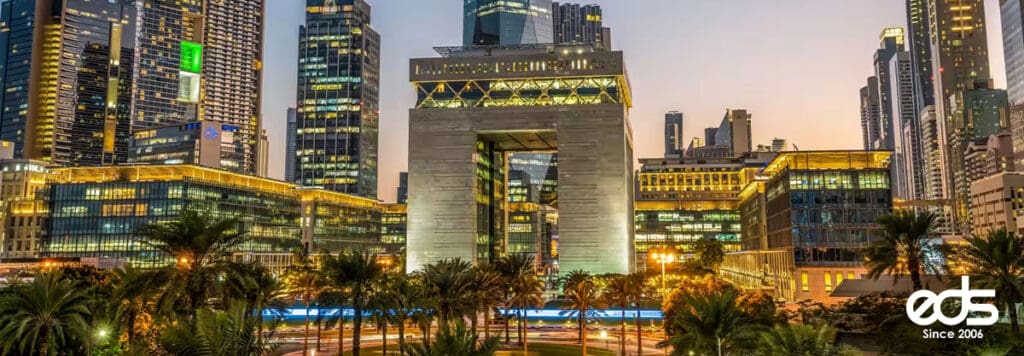
Dubai International Financial Centre (DIFC) is one of Dubai’s most important business and financial districts, combining financial services, professional firms, technology and innovation companies with restaurants, retail, hospitality, residential properties, art and cultural destinations.
Advertising in DIFC can provide access to a distinctive business, professional and lifestyle environment. Depending on current inventory, opportunities can include Digital Out-of-Home (DOOH) screens, roadside billboards, MUPIs and street-level media, lamppost advertising, building lobby screens, elevator advertising, building façade branding and selected event or activation opportunities.
EDS works as an advertising and media-buying agency, helping advertisers evaluate and coordinate suitable DIFC advertising opportunities through relevant media owners, property operators and other authorised stakeholders.
DIFC ADVERTISING MARKET – KEY FACTS
DIFC has continued to expand as a financial, business and innovation district, creating multiple audience environments within a relatively concentrated area of Dubai.
| DIFC INDICATOR | LATEST FIGURE |
|---|---|
| Active Registered Companies – H1 2026 | 10,018 |
| Regulated Financial Firms – H1 2026 | 1,134 |
| AI, FinTech & Innovation Companies – H1 2026 | 1,933 |
| Family Business-Related Entities – H1 2026 | 1,408 |
| DIFC Workforce – 2025 | 50,200 professionals |
| Gate Avenue Footfall – 2025 | 16.4 million |
| Gate Avenue Occupancy – 2025 | 99% |
| Gate Village & Gate District Occupancy – 2025 | 100% |
| DIFC Square | 600,000 sq ft, opened 2026 |
These figures illustrate why DIFC is relevant for campaigns targeting business professionals, corporate audiences, financial-sector decision-makers and consumers using the district’s retail, dining, hospitality and lifestyle environments.
DIFC ADVERTISING COSTS & RATES
Advertising costs in DIFC vary considerably because the district contains very different media environments, ranging from building interiors and pedestrian areas to roadside media and large-format building branding.
The following ranges can be used for initial campaign planning:
| ADVERTISING OPTION | TYPICAL DIFC ENVIRONMENT | INDICATIVE COST (AED) |
|---|---|---|
| Elevator Advertising | Commercial & premium residential towers | 10,000–40,000 per month |
| Building Lobby Digital Screens | Office towers & corporate buildings | 15,000–60,000 per month |
| MUPI / Street Panel Advertising | Pedestrian areas & walkways | 15,000–50,000 per month |
| Lamppost Banner Advertising | DIFC roads & surrounding areas | 20,000–70,000 per month |
| Digital Screen Advertising | Gate Village / commercial environments | 40,000–150,000 / 4 weeks |
| Street Pole Branding | Approx. 50–100 poles | 50,000–120,000 per month |
| Static Billboard Advertising | Selected premium roadside locations | 50,000–120,000 per month |
| Premium DOOH Campaign | High-footfall digital displays | 80,000–250,000+ / 4 weeks |
| Digital Billboard Advertising | Selected high-visibility locations near DIFC | 80,000–300,000+ / 4 weeks |
| Building Façade Branding | Selected tower / wall locations | 150,000–500,000+ per month |
| Corporate Tower Takeover | Large-scale building branding | 250,000–750,000+ per month |
These are indicative planning ranges rather than official media-owner quotations.
Final pricing depends on the exact media asset, location, dimensions, campaign duration, number of units, digital Share of Voice, campaign dates and current availability. Production, installation, removal, property charges and applicable approval costs may be additional.
ADVERTISING FORMATS AVAILABLE IN DIFC
DIGITAL OUT-OF-HOME (DOOH) ADVERTISING
Digital screens can provide advertising opportunities across selected commercial, pedestrian, retail and property environments within and around DIFC.
Depending on the individual screen or network, DOOH campaigns may support multiple creatives, scheduled messaging and creative rotation.
When comparing digital opportunities, advertisers should consider screen location, viewing environment, operating hours, spot duration, advertising loop, frequency and Share of Voice rather than screen dimensions alone.
ROADSIDE BILLBOARD ADVERTISING
Selected roadside locations around DIFC and its surrounding access corridors may provide static or digital billboard opportunities.
Traffic direction, viewing distance, advertising face and the relationship between the billboard and the intended audience journey should be considered when evaluating an individual site.
MUPI & STREET-LEVEL ADVERTISING
MUPIs and other street-level displays can provide advertising closer to pedestrian environments than traditional roadside billboards.
These formats can be relevant around selected walkways, commercial areas and pedestrian routes where authorised inventory is available.
LAMPPOST & STREET-POLE ADVERTISING
Lamppost and street-pole campaigns use multiple advertising units to create repeated brand presence along selected routes.
Campaign planning should consider the number of poles, road section, traffic direction, spacing and proximity to relevant DIFC destinations.
BUILDING LOBBY DIGITAL SCREENS
Selected commercial buildings may offer digital screens within lobby and common-area environments.
Unlike roadside advertising, these screens are viewed within a building environment where audiences may be closer to the display.
Availability depends on the media rights and advertising arrangements of the individual property.
ELEVATOR ADVERTISING
Elevator advertising can provide indoor visibility within selected commercial or residential towers.
Depending on the property, opportunities may include elevator screens, lobby screens or other approved internal advertising placements.
BUILDING & FAÇADE BRANDING
Selected properties may provide large-format façade, wall or building-branding opportunities.
These campaigns are highly site-specific and depend on the individual building, property rights, structural requirements, advertising dimensions and applicable approvals.
A visible building surface should not automatically be assumed to be available for commercial advertising.
EVENT, ACTIVATION & PROMOTIONAL MEDIA
DIFC also contains venues and public-facing environments used for business, cultural and lifestyle events.
Subject to venue availability and applicable approvals, advertisers may be able to consider promotional stands, event branding, installations or other activation formats.
These opportunities should be evaluated separately from conventional OOH media because space, duration, operating conditions and approval requirements can differ substantially.
MAJOR ADVERTISING ENVIRONMENTS IN DIFC
DIFC should not be treated as one uniform advertising location. Different parts of the district serve different audience journeys.
| DIFC AREA | ENVIRONMENT | AUDIENCE CONTEXT |
|---|---|---|
| Gate District | Financial, corporate, retail & dining | Professionals, clients and visitors |
| Gate Avenue | Retail, dining, wellness & pedestrian | Professionals, shoppers, diners and visitors |
| Gate Village | Business, dining, art & hospitality | Professionals, diners and cultural audiences |
| Innovation Hub / Innovation One | Technology, FinTech, AI & entrepreneurship | Founders, employees, investors and business visitors |
| DIFC Square | Commercial office environment | Professionals, employees and clients |
| Residential Towers | Residential & mixed-use | Residents, professionals and visitors |
| Financial Centre Metro Connection | Transit & pedestrian access | Commuters, employees and visitors |
| Sheikh Zayed Road Edge | Roadside and DIFC access | Motorists, commuters and professionals |
| Hotels & Hospitality | Hotels, restaurants & dining | Guests, diners and business visitors |
| Art & Cultural Areas | Galleries, exhibitions & events | Cultural audiences, professionals and visitors |
These are advertising environments to consider rather than confirmation that advertising inventory is available at every location.
Current media rights, inventory and approvals should be checked for the required campaign dates.
WHO CAN DIFC ADVERTISING REACH?
DIFC differs from a primarily residential community because a significant part of its audience is connected with business, finance, professional services and the district’s commercial ecosystem.
Depending on the selected advertising environment, campaigns can potentially reach:
- Financial-sector professionals
- Corporate executives
- Business owners and entrepreneurs
- Investors and business visitors
- Technology and FinTech professionals
- Legal and professional-services audiences
- Employees working within DIFC
- Residents
- Restaurant and hospitality customers
- Retail and wellness visitors
- Art and cultural audiences
- Metro and pedestrian commuters
OOH advertising does not individually identify these audiences. Audience relevance comes primarily from selecting media within environments that correspond with the advertiser’s intended customer base.
INDUSTRIES THAT CAN CONSIDER DIFC ADVERTISING
The concentration of business, professional and lifestyle environments can make DIFC relevant to several advertising categories.
| INDUSTRY | POTENTIALLY RELEVANT DIFC ENVIRONMENTS |
|---|---|
| Banking & Financial Services | Business districts, DOOH, corporate buildings |
| Wealth & Asset Management | Corporate environments, premium DOOH, building media |
| FinTech & Technology | Innovation environments, digital media, events |
| Legal & Professional Services | Corporate towers, lobby media, business environments |
| Real Estate | DOOH, roadside media, building screens |
| Luxury & Premium Brands | Gate Avenue, Gate Village, hospitality and digital media |
| Automotive | Roadside media, premium DOOH, selected activations |
| Hospitality & F&B | Pedestrian, retail, dining and lifestyle environments |
| Business Travel | Corporate, hospitality and selected digital media |
| Art & Culture | Event, pedestrian and cultural environments |
| B2B Services | Corporate buildings and business-focused locations |
The appropriate format should be selected according to the campaign objective and audience rather than industry category alone.
DIFC ADVERTISING VS SHEIKH ZAYED ROAD ADVERTISING
Although DIFC is closely connected with Sheikh Zayed Road, the two advertising environments are different.
| DIFC ADVERTISING | SHEIKH ZAYED ROAD ADVERTISING |
|---|---|
| Business, pedestrian, retail and property environments | Predominantly major-road advertising environment |
| Can include indoor and outdoor media | Primarily roadside OOH and DOOH |
| Lobby, elevator and street-level media may be relevant | Billboards, digital screens, unipoles and large-format media are more prominent |
| Can reach audiences within the district | Primarily reaches audiences travelling along the road corridor |
| Includes business and lifestyle environments | Strong emphasis on motorists and commuters |
A campaign can combine both areas when the objective is to create visibility both within DIFC and along the major road corridor serving the district.
STATIC OOH VS DIGITAL DOOH IN DIFC
| STATIC OOH | DIGITAL DOOH |
|---|---|
| Uses printed advertising creative | Uses digital advertising content |
| Generally displays one principal creative | Multiple creatives may be possible |
| Can include billboards, MUPIs and lampposts | Includes digital screens and digital billboards |
| Physical production may be required | Creative can generally be changed electronically |
| Provides continuous display during the booked period | Usually operates within an advertising loop |
| Suitable for sustained physical presence | Useful when messaging flexibility is required |
Neither format is automatically better. The appropriate choice depends on the location, audience, campaign objective, available inventory, creative requirements and budget.
CHOOSING THE RIGHT DIFC ADVERTISING LOCATION
Advertising selection in DIFC should begin with the audience journey rather than simply choosing the largest available advertising structure.
Consider:
- Who the campaign needs to reach
- Where that audience works, walks, visits or travels
- Pedestrian versus vehicle exposure
- Indoor versus outdoor environment
- Viewing distance
- Dwell time
- Static versus digital media
- Screen frequency and Share of Voice
- Number of advertising units
- Campaign duration
- Current availability
- Budget
For example, a lobby screen may be more relevant for a specialist B2B service seeking corporate professionals, while a roadside billboard may be more appropriate for broader awareness.
PLANNING CREATIVE FOR DIFC ADVERTISING
Creative should be designed for the selected media environment rather than adapting the same artwork to every format.
For roadside media, the message should generally be simple enough to understand quickly.
Pedestrian, lobby and elevator environments may allow audiences more time to process the advertising, although copy should still remain concise and visually clear.
For digital media, advertisers should also consider:
- Screen dimensions and orientation
- Viewing distance
- Spot duration
- Creative rotation
- Animation where supported and permitted
- Daypart scheduling where available
- Brand visibility
- Call to action
Artwork specifications should be confirmed against the individual media asset before final production.
CAMPAIGN DURATION & MEDIA AVAILABILITY
There is no single booking period applicable to every DIFC advertising format.
Some media are commonly planned around monthly or four-week cycles, while property media, event opportunities or individual digital networks may operate differently.
Availability can change according to existing bookings, campaign dates and the individual property or media operator.
Advertisers planning around major financial events, conferences, exhibitions, retail periods or other time-sensitive activity should therefore check current inventory before finalising creative and production.
RULES, PERMITS & ADVERTISING APPROVALS IN DIFC
Advertising within DIFC is subject to applicable advertising requirements, property controls, media rights and approvals.
Dubai’s advertising regulatory framework also applies to advertisements displayed within special development zones and free zones, including Dubai International Financial Centre.
Requirements vary according to the individual advertising medium and location and may relate to:
- Advertising permits and approvals
- Advertising content and creative
- Property-owner or operator approval
- Structural requirements
- Building and façade advertising
- Road and traffic safety
- Digital-screen specifications
- Installation and maintenance
- Event and promotional activity
- Production specifications
Indoor media within a commercial tower may have different requirements from a roadside billboard, building façade or public-facing digital screen.
Advertisers should therefore confirm the applicable approval process for the specific media asset, rather than assuming one approval route applies to all DIFC advertising.
EDS works as an advertising and media-buying agency and coordinates with relevant media owners, property operators and other applicable stakeholders according to the requirements associated with the selected advertising inventory.
DIFC (Dubai International Financial Centre) Advertising FAQ
What advertising opportunities are available in DIFC Dubai?
Depending on current inventory, advertising opportunities in DIFC can include DOOH screens, roadside billboards, MUPIs and street-level media, lamppost advertising, building lobby screens, elevator advertising, building and façade branding, and selected event or activation media.
How much does advertising in DIFC cost?
Advertising costs in DIFC vary by format, location and campaign duration. Indicative planning ranges include AED 10,000–40,000 per month for elevator advertising, AED 15,000–60,000 per month for building lobby digital screens, AED 40,000–150,000 per four weeks for selected digital screens and AED 80,000–250,000+ per four weeks for premium DOOH campaigns. Large-scale building branding can cost substantially more.
Is DOOH advertising available in DIFC?
Yes. Digital Out-of-Home (DOOH) advertising may be available across selected commercial, pedestrian, property and roadside environments within and around DIFC. Screen specifications, advertising frequency, Share of Voice and availability depend on the individual media asset.
Can I advertise inside DIFC office buildings?
Advertising may be available within selected DIFC commercial buildings through lobby digital screens, elevator media and other approved property-based formats. Availability depends on the individual building, its media rights and current inventory.
Can I advertise on DIFC towers or building façades?
Selected building and façade branding opportunities may be available in DIFC. Availability depends on the individual property, media rights, structural requirements, advertising dimensions and applicable approvals.
Is MUPI advertising available in DIFC?
MUPI and other street-level advertising may be available across selected pedestrian, retail and commercial environments in DIFC. Exact locations and inventory should be confirmed for the required campaign dates.
Is lamppost advertising available around DIFC?
Lamppost and street-pole advertising may be available along selected roads and surrounding areas. Campaign availability depends on the road section, number of units, campaign period and current authorised inventory.
Can I advertise around Gate Avenue or Gate Village?
Advertising opportunities can be considered across selected media environments serving Gate Avenue and Gate Village. Available formats may vary by location, property and media operator, so current inventory should be confirmed for the required campaign period.
What types of businesses can consider advertising in DIFC?
DIFC can be relevant for financial services, banking, wealth management, FinTech, technology, legal and professional services, real estate, automotive, hospitality, luxury brands, restaurants and other businesses seeking corporate, professional or premium audiences.
Can DIFC advertising be combined with Sheikh Zayed Road advertising?
Yes. Subject to suitable inventory and budget, advertisers can combine media within DIFC with roadside OOH and DOOH along Sheikh Zayed Road to create visibility across different stages of the audience journey.
How long can a DIFC advertising campaign run?
Campaign periods depend on the selected media asset and operator. Many formats are planned around monthly or four-week periods, while digital networks, property media, building branding and event advertising may have different booking arrangements.
Does advertising in DIFC require permits and approvals?
Yes. Applicable requirements depend on the location, advertising format, property, structure and campaign content. Property-owner, media-operator and other applicable approvals may also be required depending on the selected advertising opportunity.
Can EDS arrange advertising in DIFC?
Yes. EDS can help advertisers evaluate and coordinate available DIFC advertising opportunities through relevant media owners, property operators and other authorised stakeholders. This can include reviewing suitable locations, formats, specifications, current rates and campaign availability.