
DIGITAL MARKETING


Indoor LED Display Screens in Dubai, UAE
Looking for indoor LED display screens in Dubai? EDS provides high-resolution indoor LED screens and fine-pitch LED video walls for retail stores, shopping malls, corporate offices, hotels, restaurants, showrooms, conference rooms, reception areas and entertainment venues across the UAE.
Indoor LED displays combine modular screen technology with bright, detailed images and flexible dimensions. Unlike conventional LCD video walls, direct-view LED screens can create large, continuous display surfaces without the visible bezel lines associated with multiple LCD panels.
Available in pixel pitches such as P1.2, P1.5, P1.8, P2, P2.5, P3 and P4, indoor LED screens can be configured according to viewing distance, screen dimensions, content resolution, ambient lighting and installation requirements.
Established in Dubai in 2006, EDS FZCO provides LED display screen solutions in Dubai, supporting projects involving technical specifications, screen supply, installation, content configuration and maintenance, depending on the agreed scope.
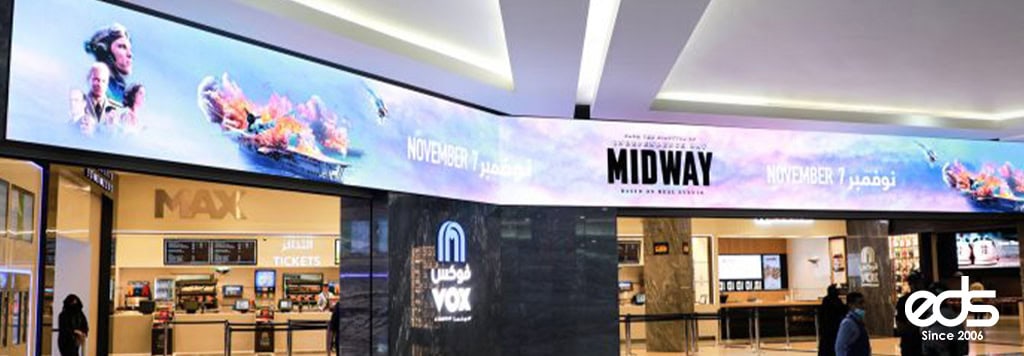
WHAT IS AN INDOOR LED DISPLAY SCREEN?
An indoor LED display screen is a digital display system that uses light-emitting diodes to produce images, videos, graphics and text within an indoor environment.
Individual LED modules or cabinets are connected to create a continuous digital display surface. This modular construction allows indoor LED screens to be configured in different dimensions and aspect ratios.
Indoor LED screens can display:
Promotional videos and advertisements
Product images and demonstrations
Corporate presentations
Digital menus and promotional offers
Brand campaigns and announcements
Live camera feeds and event content
Information dashboards and data
Entertainment and multimedia content
Unlike conventional printed signage, LED displays allow businesses to update digital content without replacing the physical display.
The appropriate indoor LED screen depends on the viewing environment, expected audience distance and type of information being displayed.
INDOOR LED SCREEN RATES & COST IN DUBAI, UAE
The cost of an indoor LED display screen in Dubai depends on screen dimensions, pixel pitch, resolution, cabinet construction, LED technology, controller, installation method and supporting equipment.
Fine-pitch displays generally cost more per square metre than standard indoor LED screens because of their higher pixel density.
Estimated Indoor LED Screen Prices in Dubai
| Indoor LED Screen Type | Indicative Equipment Cost (AED/m²) | Typical Application |
|---|---|---|
| P3–P4 Indoor LED Screen | 2,000–3,500 | Large retail displays, shopping malls |
| P2.5–P3 Indoor LED Screen | 2,500–4,500 | Showrooms, commercial interiors |
| P2–P2.5 Indoor LED Screen | 3,000–5,500 | Retail stores, offices, reception areas |
| P1.5–P1.8 Fine-Pitch LED | 4,500–8,000 | Boardrooms, premium retail, corporate spaces |
| P1.2–P1.5 Fine-Pitch LED | 5,000–10,000+ | Premium close-viewing applications |
| Custom Indoor LED Video Wall | 3,000–8,000+ | Corporate, hospitality and architectural displays |
Important: These are indicative budgeting estimates rather than verified current EDS rates or binding supplier quotations. Prices are expressed per square metre of LED display equipment and generally exclude installation, mounting structures, controllers, cabling, delivery, maintenance and VAT.
Indoor LED Screen Installation & Additional Costs
| Component | Indicative Cost (AED) |
|---|---|
| Basic Indoor LED Installation | 1,500–5,000+ |
| LED Video Processor / Controller | 1,000–6,000+ |
| Wall Mounting / Supporting Structure | Based on site requirements |
| Electrical & Data Cabling | Based on installation |
| Content Management System | Based on software and licensing |
| Annual Maintenance Contract | Based on screen size and service scope |
Installation costs vary according to screen size, mounting method, accessibility, electrical infrastructure and project complexity.
Example: Cost of a 3m × 2m Indoor LED Screen
| Description | Estimated Cost |
|---|---|
| Screen Size | 3m × 2m |
| Total Display Area | 6 m² |
| Pixel Pitch | P2.5 |
| Indicative Equipment Rate | AED 3,000–5,500/m² |
| LED Screen Equipment Cost | AED 18,000–33,000 |
| Installation, Controller & Accessories | Additional |
| Total Project Cost | Subject to final technical specification |
This example is for budget planning only. The final quotation should confirm the selected LED technology, cabinet configuration, native resolution, warranty, installation scope and applicable taxes.
WHAT AFFECTS INDOOR LED SCREEN PRICES?
The main cost factors include screen width and height, total display area, pixel pitch, resolution, LED technology, cabinet design, controller, supporting structure, installation method, access and maintenance requirements.
A comparison based only on price per square metre may be misleading if the quotations use different pixel pitches, controllers or installation specifications.
WHY USE INDOOR LED SCREENS?
Indoor LED screens provide businesses with flexible digital display options for communication, advertising, presentations and visual experiences.
High-Resolution Viewing
Indoor audiences frequently view screens from relatively short distances.
Fine-pitch LED displays can provide the pixel density needed to present detailed images, graphics and video in close-viewing environments.
Custom Screen Dimensions
LED modules can be assembled into different screen sizes and configurations.
This makes indoor LED technology suitable for reception walls, retail displays, corporate installations and customised architectural spaces.
Continuous Display Surface
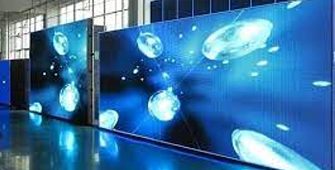
Modular LED screens can create large display surfaces without the conventional bezel interruptions associated with tiled LCD video walls.
Dynamic Digital Content
Businesses can update promotions, videos, product information, presentations and announcements according to their requirements.
Flexible Installation Options
Indoor LED displays can be wall-mounted, recessed, freestanding, suspended or incorporated into customised structures, subject to the installation conditions.
Long-Term Commercial Applications
Permanent indoor LED installations can support ongoing digital communication in retail, hospitality, corporate and commercial environments.
INDOOR LED SCREEN APPLICATIONS IN DUBAI
Indoor LED displays are used across retail, hospitality, corporate, entertainment and commercial environments throughout Dubai and the UAE.
| Location / Industry | Common LED Screen Applications |
|---|---|
| Retail Stores | Product promotions, brand campaigns, digital merchandising |
| Shopping Malls | Advertising, entertainment, digital information and promotions |
| Corporate Offices | Reception displays, presentations and company announcements |
| Hotels & Resorts | Guest information, events, entertainment and branding |
| Restaurants & F&B | Digital menus, offers, product visuals and promotions |
| Automotive Showrooms | Vehicle presentations and promotional videos |
| Real Estate Showrooms | Property visualisations and project presentations |
| Conference Rooms | Presentations, video content and corporate communication |
| Exhibitions | Stand branding, product demonstrations and event information |
| Museums & Galleries | Multimedia exhibits and visitor information |
| Universities & Institutions | Announcements, presentations and information displays |
| Entertainment Venues | Visual effects, stage content and branded experiences |
Indoor LED Screens for Retail Stores
Retail stores use indoor LED displays to present promotional campaigns, new arrivals, product demonstrations, seasonal offers and brand content.
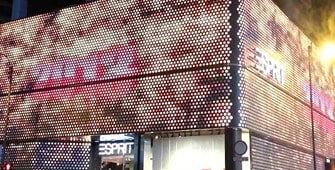
Common locations include feature walls, store entrances, checkout areas, promotional zones and window-facing displays.
The screen should complement customer movement through the store rather than simply occupy the largest available wall.
Indoor LED Screens for Shopping Malls
Shopping malls use LED screens for digital advertising, retail promotions, entertainment, events and visitor information.
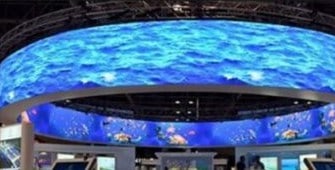
Large indoor displays may be installed in atriums, corridors, commercial zones and other approved locations.
The appropriate specification depends on viewing distance, ambient lighting, screen height and audience movement.
For businesses interested in purchasing advertising space rather than installing their own equipment, EDS also provides shopping mall advertising solutions in Dubai.
Indoor LED Screens for Corporate Offices
Corporate LED screens are used in reception areas, boardrooms, meeting rooms, auditoriums, office lobbies and experience centres.
Typical content includes corporate videos, presentations, company information, dashboards, announcements and live events.
For premium corporate environments, image quality, installation finish and maintenance access are particularly important.
Indoor LED Screens for Hotels & Hospitality
Hotels and hospitality venues use indoor LED displays for branding, guest information, conferences, entertainment and promotional content.
Installations may include hotel lobbies, ballrooms, conference facilities, restaurants and event spaces.
Screen design should integrate with the architecture and interior environment.
Indoor LED Screens for Restaurants & F&B
Restaurants and food service businesses can use indoor LED screens for digital menus, promotional offers, product images, branded content and entertainment.
Screens may be positioned inside the restaurant, across food courts, near ordering counters or facing customers through shop windows.
For detailed menu content, readability and resolution can be more important than screen size alone.
Indoor LED Screens for Showrooms
Automotive, property, furniture and technology showrooms use LED displays for product presentations, specifications, promotional campaigns and visual demonstrations.
The appropriate screen dimensions and pixel pitch depend on the showroom layout and expected customer viewing distance.
INDOOR LED SCREENS FOR EVENTS & EXHIBITIONS
Indoor LED displays are widely used for exhibitions, conferences, product launches, corporate events, presentations and entertainment.
They can display branding, presentations, videos, live camera feeds, sponsor content and event information.
Temporary installations require consideration of screen size, viewing distance, venue access, structural support, power and setup schedules.
For short-term requirements, LED screen rental in Dubai may be more suitable than purchasing and permanently installing a display.
FINE-PITCH INDOOR LED SCREENS
Fine-pitch LED screens are designed for applications where viewers are relatively close to the display and image detail is important.
They are commonly considered for corporate lobbies, boardrooms, premium retail stores, showrooms, experience centres, conference facilities and control rooms.
Fine-pitch displays may be appropriate when content contains detailed graphics, presentations, small text, product information or data.
However, a finer pixel pitch does not automatically make a screen better for every installation.
The correct specification depends on viewing distance, screen dimensions, content resolution and budget.
WHAT IS INDOOR LED SCREEN PIXEL PITCH?
Pixel pitch refers to the distance between the centres of neighbouring LED pixels, normally expressed in millimetres.
A smaller pixel pitch means the pixels are positioned closer together.
For example, a P1.5 display has more closely spaced pixels than a P3 display.
Closer pixel spacing can provide greater image detail at shorter viewing distances, but it generally increases equipment cost.
INDOOR LED PIXEL PITCH GUIDE
| Pixel Pitch | Typical Viewing Environment | Common Applications |
|---|---|---|
| P1.2–P1.5 | Very close viewing | Premium corporate interiors, control rooms |
| P1.5–P1.8 | Close viewing | Boardrooms, premium retail, reception areas |
| P2–P2.5 | Close to medium viewing | Offices, retail stores, showrooms |
| P2.5–P3 | Medium viewing | Shopping malls, commercial displays |
| P3–P4 | Longer indoor viewing distances | Large indoor displays, atriums, events |
These are general planning guidelines, not fixed viewing-distance rules.
HOW DO I CHOOSE THE RIGHT PIXEL PITCH?
Pixel pitch selection should begin with the closest realistic viewing distance.
If audiences regularly stand close to the screen, a finer pixel pitch may provide a better viewing experience.
If the display is mounted high inside a shopping mall or viewed across a large interior space, an extremely fine pixel pitch may offer limited visible benefit relative to its additional cost.
Important considerations include:
Minimum viewing distance
Typical viewing distance
Screen width and height
Content detail and text size
Required native resolution
Installation environment
Available budget
INDOOR LED SCREEN RESOLUTION, BRIGHTNESS & SIZE
Indoor LED Screen Resolution
Screen dimensions and pixel pitch together determine the native resolution of an LED display.
Two screens measuring exactly the same physical size can have very different resolutions if they use different pixel pitches.
Content should ideally be prepared according to the screen’s native pixel dimensions and aspect ratio.
Indoor LED Screen Brightness
Indoor LED displays generally require less brightness than outdoor LED screens because they operate within controlled environments.
However, brightness requirements can vary significantly.
A screen facing a brightly illuminated retail environment or glass frontage may require different brightness levels from a display installed inside a darkened conference room.
Excessive brightness can make close-viewing displays uncomfortable.
Choosing the Right Indoor LED Screen Size
Indoor LED screens can be configured in different dimensions because of their modular construction.
The appropriate screen size depends on available space, viewing distance, audience size, content, purpose and architectural surroundings.
An oversized screen in a small reception area may overwhelm the space, while an undersized display may be difficult to view across a large atrium.
STANDARD VS CUSTOM INDOOR LED SCREENS
Some projects can use standard screen dimensions, while others require a display designed around the architecture.
Custom indoor LED installations may be appropriate for:
Reception feature walls
Retail display areas
Architectural openings
Showroom installations
Corporate experience centres
Custom presentation walls
LED module dimensions and cabinet configurations should be considered during planning to avoid unnecessary fabrication complexity.
INDOOR LED SCREEN INSTALLATION METHODS
The physical installation method should be selected according to the building, screen dimensions, supporting structure and intended use.
Wall-Mounted Indoor LED Screens
LED modules or cabinets are installed on an appropriate supporting structure against a wall.
This method is commonly used in retail stores, offices, reception areas, showrooms and hospitality environments.
Recessed Indoor LED Screens
Recessed installations integrate the display into an architectural wall or feature to create a built-in appearance.
They require consideration of screen depth, ventilation, structural support and maintenance access.
Freestanding Indoor LED Screens
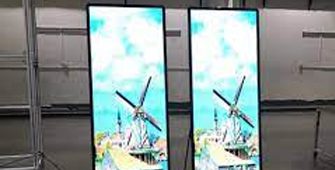
Freestanding LED displays use supporting structures rather than permanent wall mounting.
They may be suitable for retail promotions, exhibitions, showrooms and selected commercial spaces.
Hanging Indoor LED Screens
For suitable applications, indoor LED screens can be suspended from an engineered support system.
The supporting structure must be designed according to the weight, configuration and safety requirements of the display.
Custom LED Installations
Selected projects may require purpose-designed structures according to the architecture and screen configuration.
All installation methods should consider structural support, electrical requirements, ventilation, data connectivity and maintenance access.
FRONT-SERVICE VS REAR-SERVICE INDOOR LED SCREENS
Maintenance access is an important consideration when planning permanent indoor LED installations.
Front-Service LED Screens
Front-service LED systems allow relevant components to be accessed from the front of the display.
They may be particularly useful for wall-mounted or recessed installations where little or no space is available behind the screen.
Rear-Service LED Screens
Rear-service systems require access behind the display for maintenance.
They may be appropriate when sufficient rear clearance is available.
Maintenance access should be planned before installation rather than after the screen has been built into the space.
WHAT CONTENT CAN BE DISPLAYED ON AN INDOOR LED SCREEN?
Depending on the controller and content management system, indoor LED screens can display videos, images, animations, presentations, advertisements, digital menus, product information, dashboards, live feeds and announcements.
Content should be produced according to the display’s native resolution, aspect ratio, viewing distance and physical dimensions.
Simply enlarging conventional social media or television content across a large LED display may not produce the best visual result.
For businesses requiring original video content and promotional visuals, EDS also offers video production and photography services.
INDOOR LED SCREEN CONTENT MANAGEMENT
Different indoor LED projects require different levels of content control.
A simple display may need occasional manual updates, while a commercial installation may require scheduled playlists, remote updates, time-based content or management of multiple screens.
Depending on the system, content can be managed through a media player, LED controller, content management system, local network or remote management platform.
For businesses operating multiple displays, centralised content management can help maintain consistent messaging across locations.
INDOOR LED SCREEN MAINTENANCE & SUPPORT
Permanent indoor LED displays require suitable maintenance arrangements to support reliable operation.
Depending on the screen and installation, maintenance may include:
Visual inspections
LED module replacement
Power supply checks
Controller checks
Cable inspections
Cleaning
Calibration
Software support
Planning appropriate service access can reduce disruption when maintenance is required.
For critical installations, businesses may also consider keeping suitable spare modules and components according to the screen specification.
INDOOR LED SCREEN PERMITS, SAFETY & INSTALLATION REQUIREMENTS IN UAE
Indoor LED installations in Dubai and the UAE must comply with applicable building, electrical, fire safety and property requirements.
The approval process depends on the installation location, screen size, supporting structure and intended use.
Projects may require property management approval, landlord permission, technical drawings, electrical assessments or other applicable clearances.
Screens installed in shopping malls, hotels, public-facing commercial areas and event venues may be subject to additional property or venue requirements.
Suspended and large-format displays should be installed using appropriately designed supporting structures.
Final approval requirements depend on the location and relevant jurisdiction.
INDOOR LED DISPLAY SCREENS IN DUBAI & UAE – FAQ
What is an indoor LED display screen?
An indoor LED display screen uses light-emitting diodes to show videos, images, graphics and text inside commercial or corporate environments. Indoor LED screens are commonly installed in shopping malls, retail stores, offices, hotels, showrooms and conference rooms. They can be configured in different sizes and resolutions according to viewing distance and installation requirements.
How much does an indoor LED screen cost in Dubai?
Indicative equipment-only prices may range from AED 2,000–3,500 per square metre for standard P3–P4 indoor screens to AED 5,000–10,000 or more per square metre for premium fine-pitch displays. Actual prices depend on the screen specification, installation and supporting equipment. These figures are planning estimates rather than fixed quotations.
What is the best pixel pitch for an indoor LED screen?
The best pixel pitch depends on viewing distance, screen dimensions and content. P1.2–P1.8 displays may suit premium close-viewing applications such as boardrooms and corporate reception areas, while P2–P4 screens can be suitable for retail stores, shopping malls and other indoor commercial environments.
What is the difference between P1.5 and P2.5 LED screens?
A P1.5 LED screen has pixels spaced 1.5 mm apart, while a P2.5 screen has pixels spaced 2.5 mm apart. P1.5 generally provides greater image detail at shorter viewing distances but can cost more. The appropriate specification depends on the screen size, content resolution, viewing distance and budget.
Can indoor LED screens be customised to different sizes?
Yes. Indoor LED screens use modular technology, allowing different dimensions and configurations. They can be designed for reception walls, retail displays, corporate offices, showrooms and architectural installations. The final screen size should account for cabinet dimensions, available space, viewing distance and installation requirements.
Are indoor LED screens suitable for shopping malls?
Yes. Indoor LED displays are used in shopping malls for digital advertising, promotions, entertainment, retail campaigns and visitor information. Screens may be installed in atriums, corridors, retail stores and approved commercial locations. The specification should reflect viewing distance, ambient lighting, screen placement and property requirements.
Can indoor LED screens be wall-mounted or recessed?
Yes. Indoor LED displays can be wall-mounted, recessed, freestanding or suspended where technically suitable. The installation method depends on the supporting structure, screen dimensions, ventilation, electrical requirements and maintenance access. Front-service LED screens may be useful where limited space is available behind the display.
What is the difference between an indoor LED screen and an LCD video wall?
An indoor direct-view LED screen uses modular LED panels to create a continuous display surface without conventional LCD bezel lines. An LCD video wall combines multiple LCD panels, which may have visible borders between them. The appropriate technology depends on viewing distance, resolution, dimensions, content and budget.
Can indoor LED screens display live video and presentations?
Yes. Depending on the controller and connectivity, indoor LED screens can display presentations, videos, images, live camera feeds, advertisements, dashboards and other digital content. Content should be prepared according to the screen’s native resolution and aspect ratio for the best viewing experience.
How much maintenance does an indoor LED screen require?
Maintenance depends on screen technology, operating hours and installation conditions. Typical activities include cleaning, visual inspections, module checks, controller checks, calibration and software support. Appropriate service access and preventive maintenance can help maintain display performance and reduce operational disruptions.
Does indoor LED screen pricing include installation?
Not necessarily. Equipment-only prices generally exclude installation, mounting structures, controllers, cabling and other project requirements. A supply-and-install quotation should identify all included components, services, warranty terms, maintenance arrangements and applicable taxes.
Does EDS supply and install indoor LED screens in Dubai and UAE?
Yes. Established in Dubai in 2006, EDS provides indoor LED display solutions for businesses across Dubai, Abu Dhabi, Sharjah and other UAE emirates. Depending on the project scope, services can include screen selection, technical planning, supply, installation, configuration, content requirements and maintenance support.