


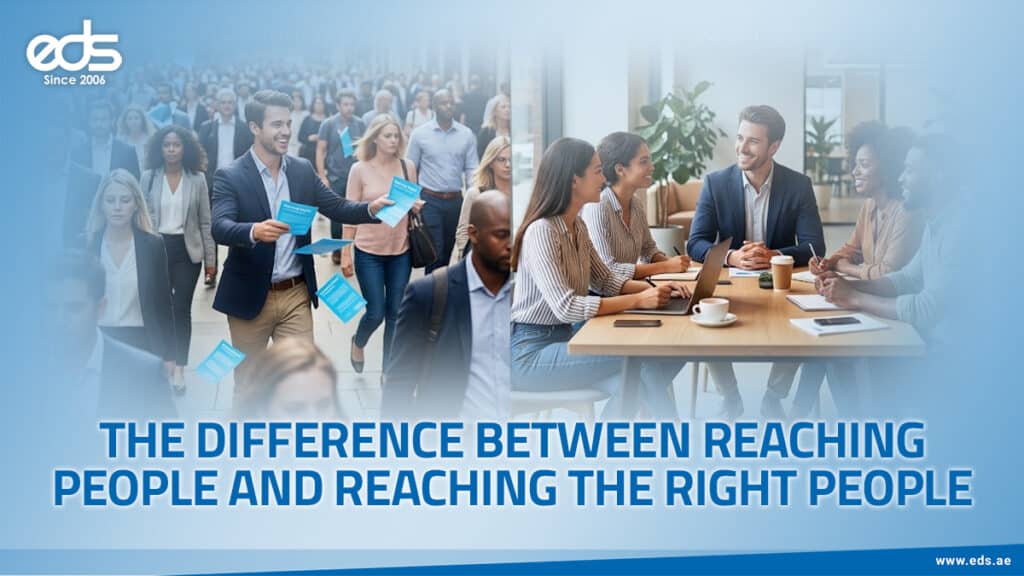
In advertising, reaching a large number of people can look impressive. A campaign may generate thousands of impressions, views or interactions, but numbers alone do not tell the complete story. The real question is whether your message is reaching people who are genuinely relevant to your business.
That is the difference between reaching people and reaching the right target audience.
Reach Creates Visibility, Relevance Creates Opportunity
Reach is important for building awareness. The more people who see a brand, the greater its potential visibility. However, not everyone who sees an advertisement will need, want or consider the product or service being promoted.
This is where audience targeting becomes valuable.
Understanding customer interests, locations, behaviours, demographics and buying needs allows businesses to focus their advertising on audiences that are more relevant to their objectives. Instead of simply asking how many people can be reached, businesses can ask where their potential customers are and how they make decisions.
Strategy Should Come Before the Channel
A common mistake is choosing an advertising platform first and then trying to fit the campaign around it. Effective media planning starts with the business objective, target audience, market, timing and available budget.
For example, Google Ads can help connect with people actively searching for a product or service. SEO can help businesses build organic visibility when potential customers search for relevant information. Meanwhile, social media marketing can introduce brands to defined audience groups and build awareness before a customer actively searches.
Different channels serve different purposes. The right combination depends on the customer journey.
More Leads Do Not Always Mean Better Leads
The difference becomes even clearer with lead generation. A campaign may produce hundreds of enquiries, but if most are poorly matched to the business, the quantity can become less meaningful.
Effective lead-generation campaigns can combine paid media, audience targeting, landing pages, creative content and conversion tracking. These elements help businesses understand not just who responded, but what happened after the response.
A smaller number of relevant enquiries may provide more useful opportunities than a much larger volume of unsuitable ones.
Think Beyond a Single Platform
Customers rarely follow one straight path. Someone may notice a brand through outdoor advertising, search for it on Google, encounter it again through social media and eventually contact the company through its website.
This is why an integrated advertising approach can connect different touchpoints throughout the customer journey. Digital marketing, media buying, SEO, social media, OOH and other channels can work together when they are selected around a clear objective.
Make Every Advertising Opportunity Count
The goal of advertising is not simply to be everywhere. It is to be visible where the right people are paying attention.
A strong campaign begins by identifying the target audience, understanding their journey and selecting the media that can create the most relevant connection. When strategy, audience and channel work together, every impression has a clearer purpose.
Planning your next campaign in Dubai, across the UAE or GCC?
Turn your audience insights into a focused advertising strategy. For campaign discussions, call +971 4 519 3444 or email info@eds.ae.